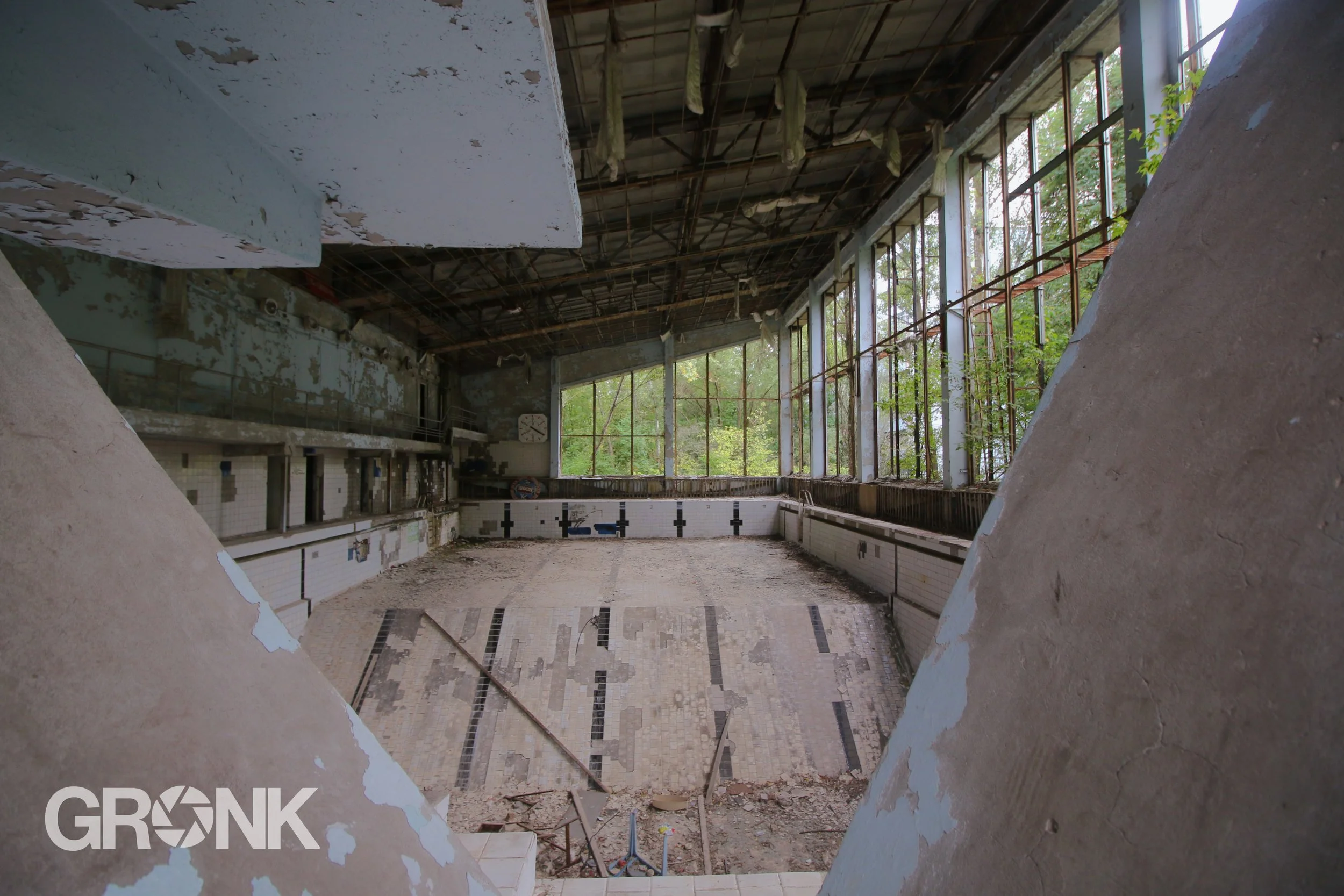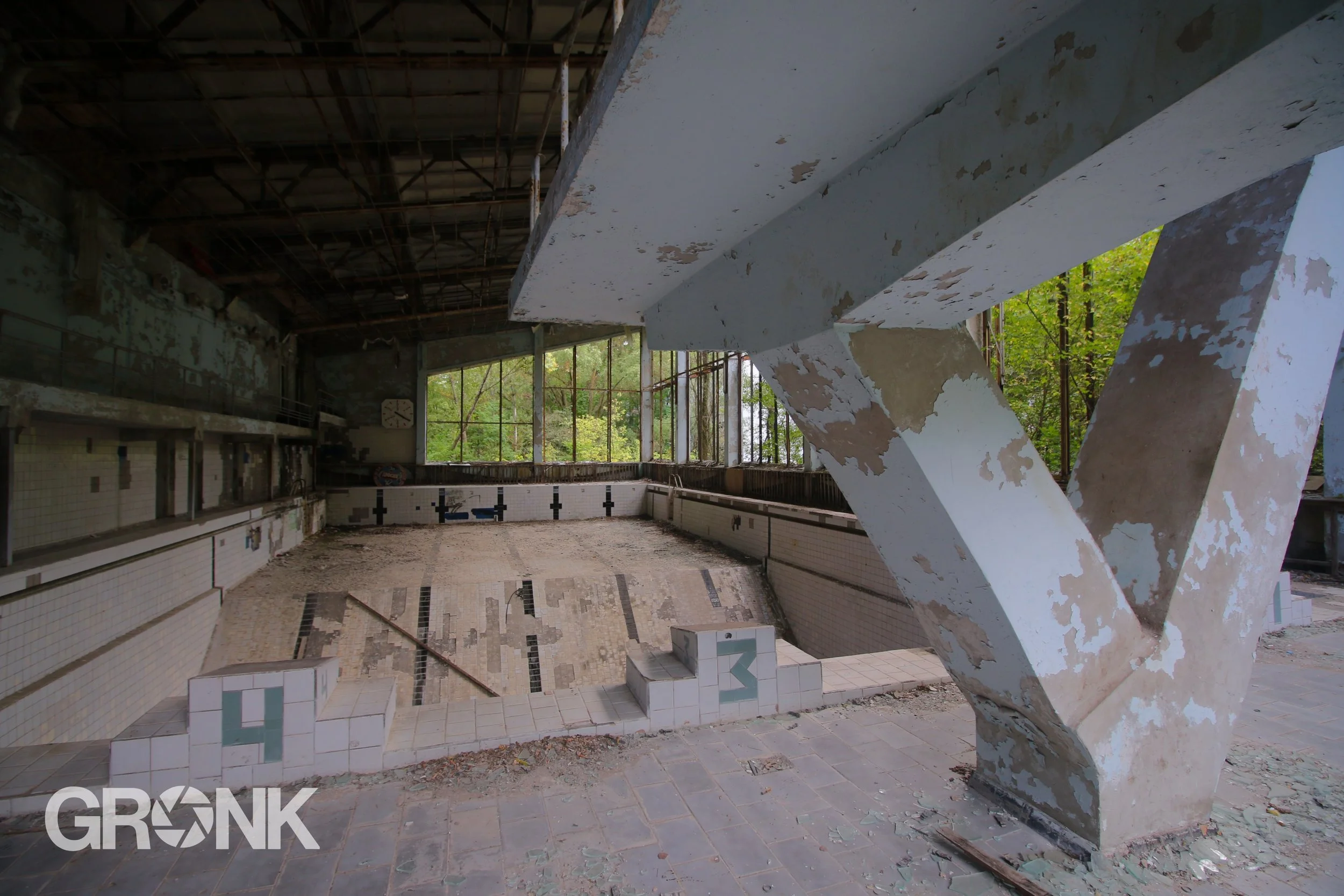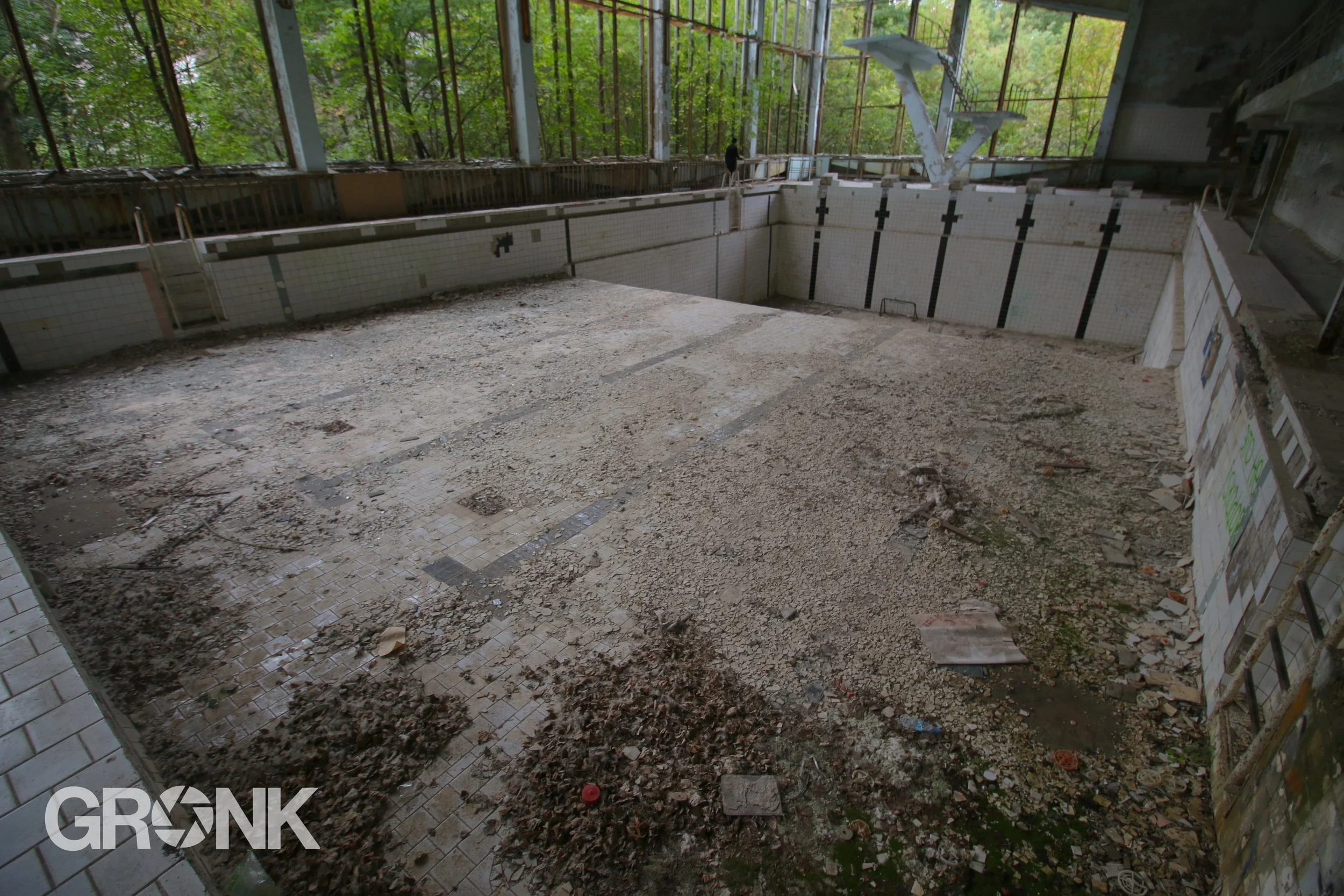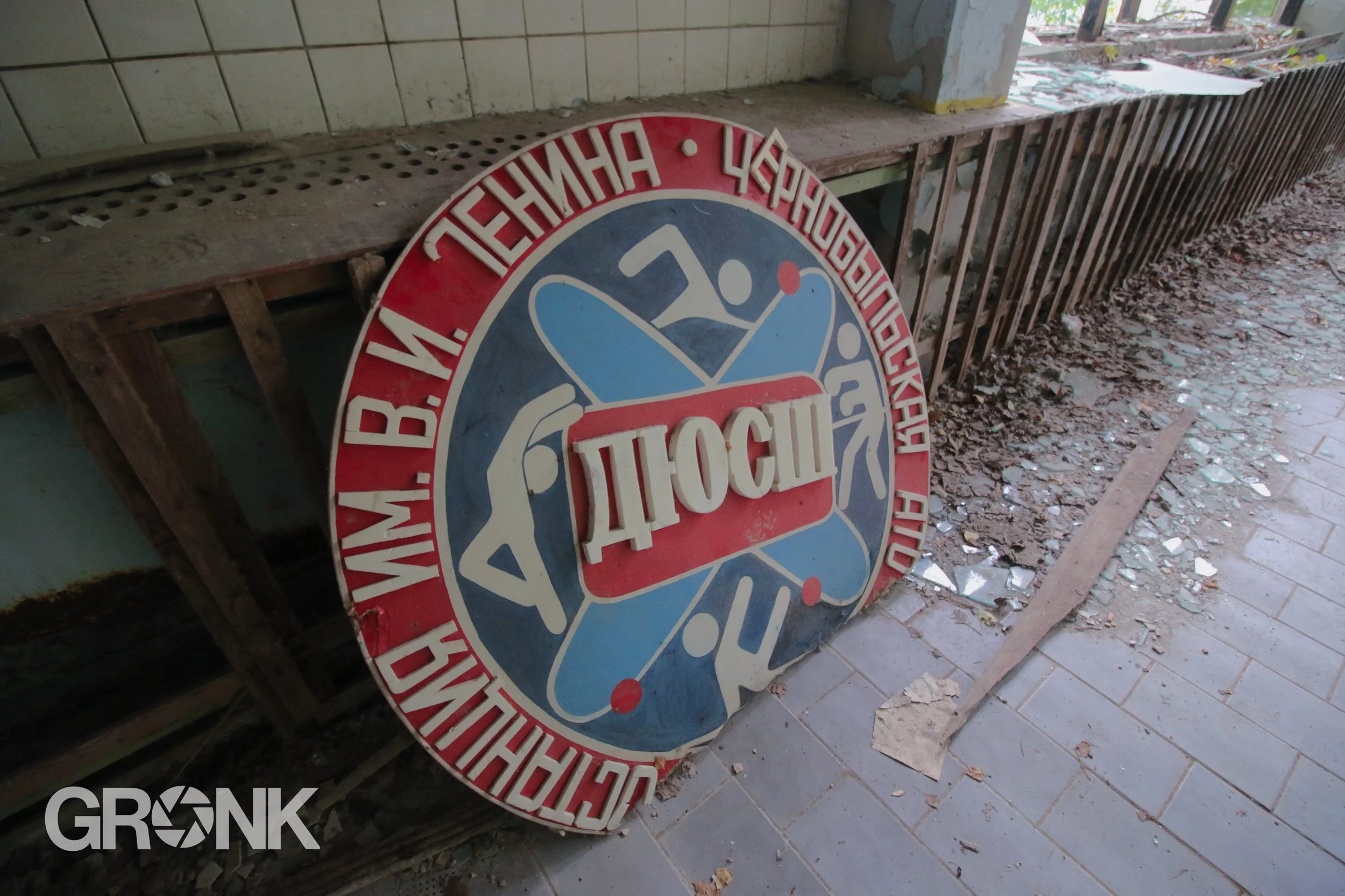
Azure Swimming Pool, Pripyat
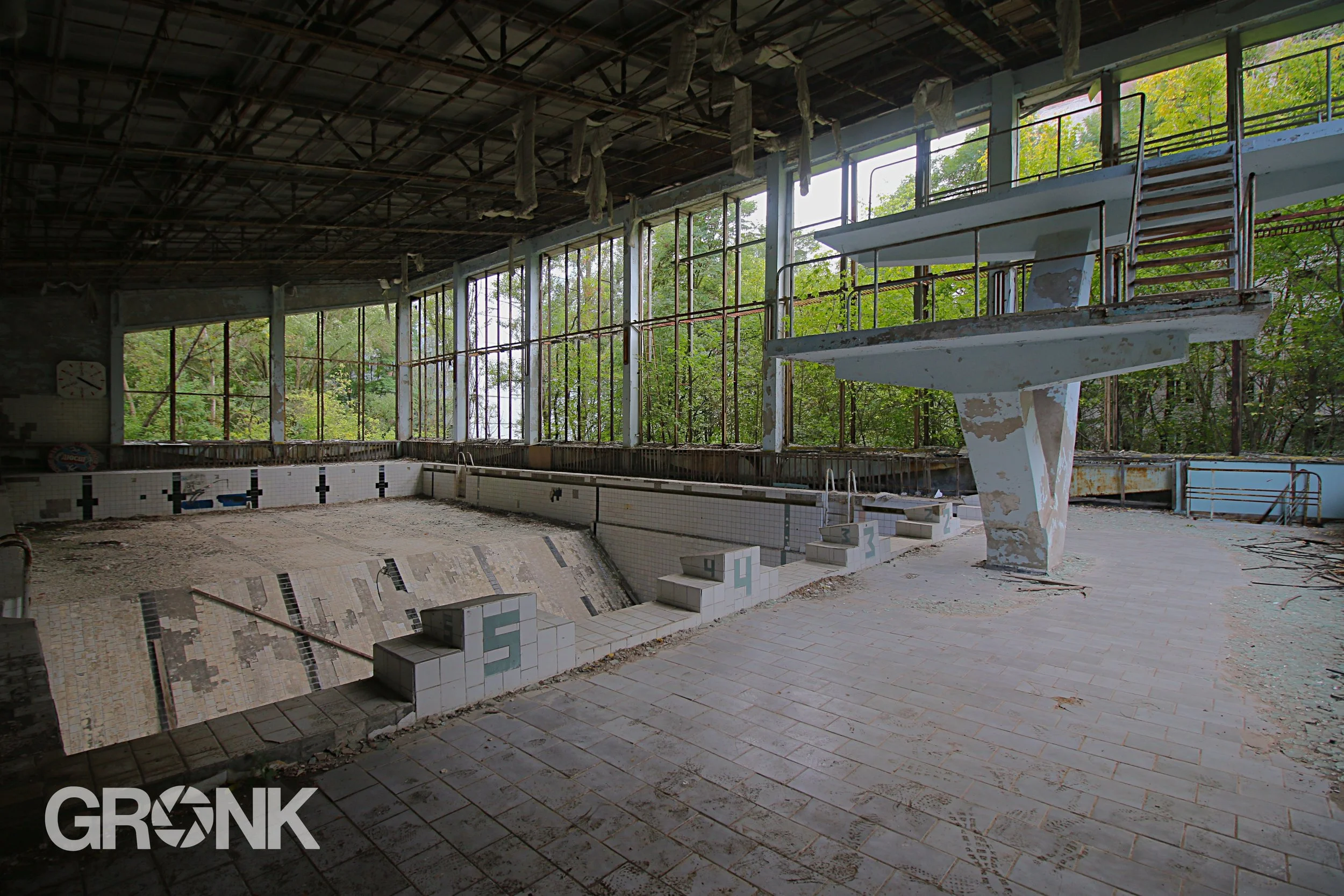
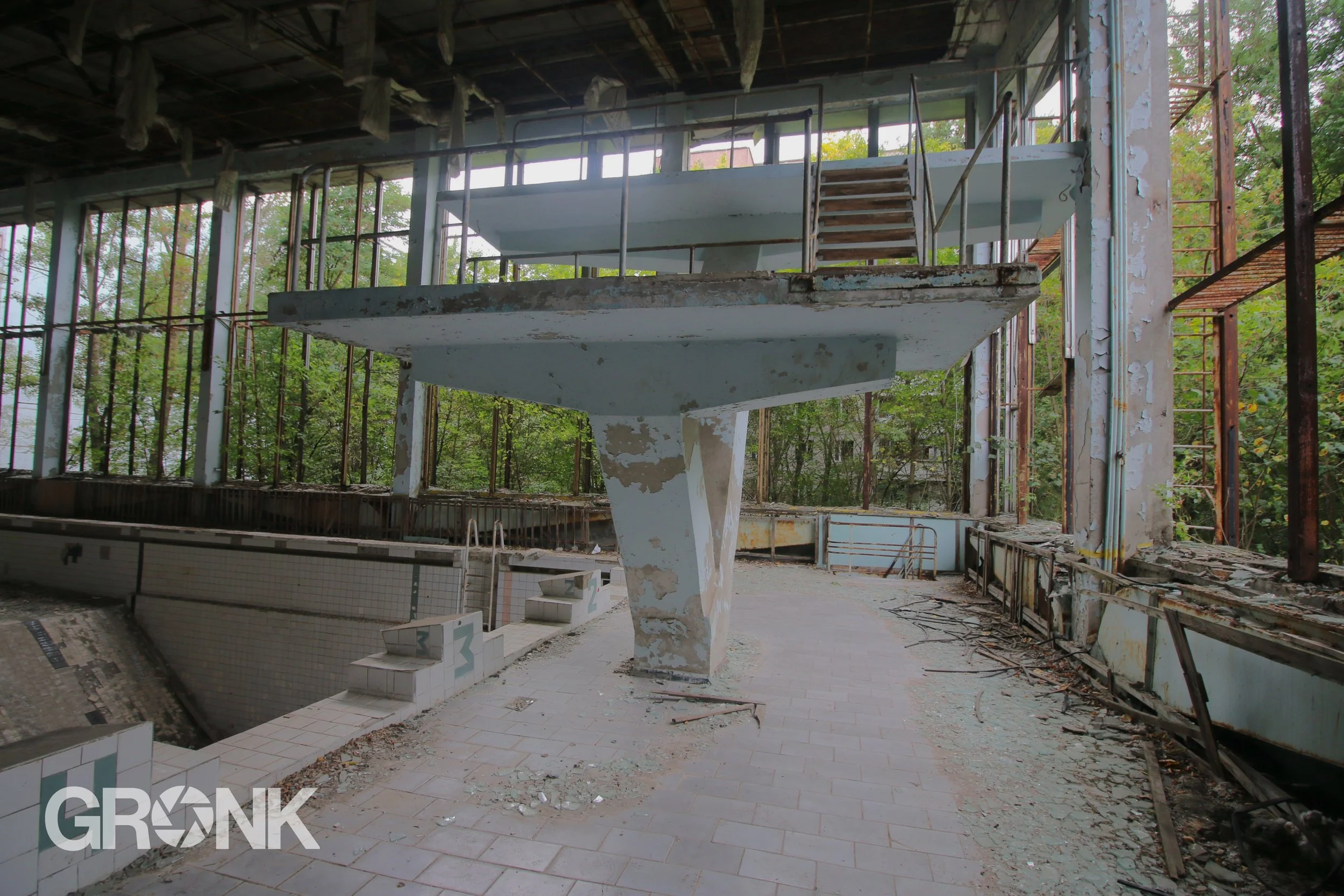
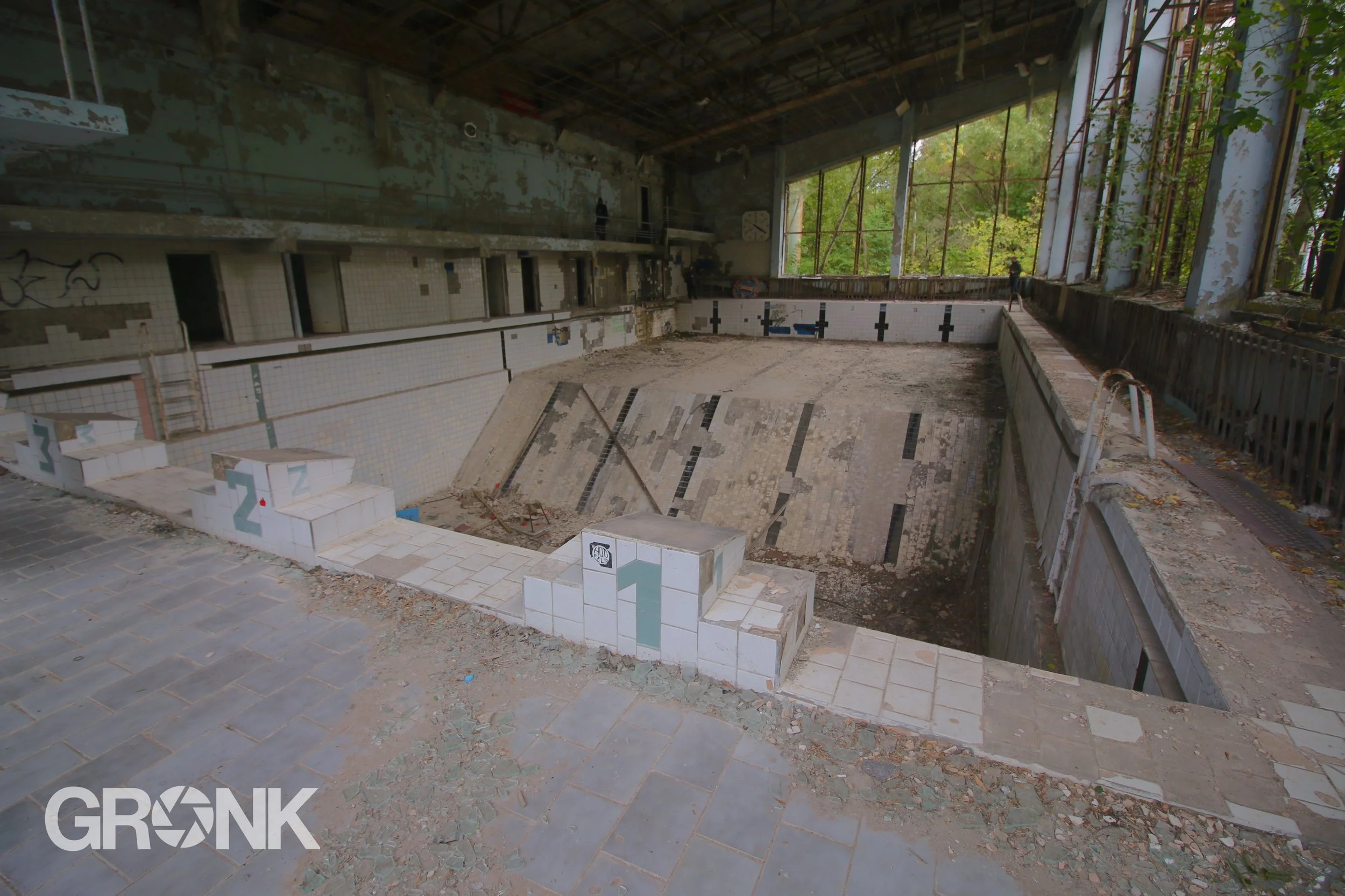
The Azure Swimming Pool, also known as Lazurny, was constructed in the 1970s during the development of Pripyat, a purpose-built Soviet city created to house workers from the Chernobyl Nuclear Power Plant. Designed as a modern recreational facility, it featured a large indoor swimming pool, diving boards, a smaller secondary pool, and an adjoining gymnasium. With its tall glass façade and functional Soviet architectural style, it served as one of the city’s main leisure centers, especially for families and schoolchildren.
Before the Chernobyl disaster, Azure was a thriving social hub. Residents used it for sport training, school activities, swimming lessons, and general recreation. It formed part of a broader network of cultural and athletic facilities that made Pripyat one of the more well-equipped Soviet “atom cities,” offering a high standard of living for plant workers and their families.
After the 1986 nuclear disaster and the evacuation of Pripyat, the pool underwent an unusual chapter in its history. Unlike most buildings in the abandoned city, Azure remained operational for more than a decade. Cleanup workers, known as liquidators, and later exclusion-zone personnel continued using the pool because its interior remained relatively low in radiation contamination. For these workers—often facing harsh, exhausting conditions—Azure provided a rare place for hygiene, exercise, and brief mental reprieve.
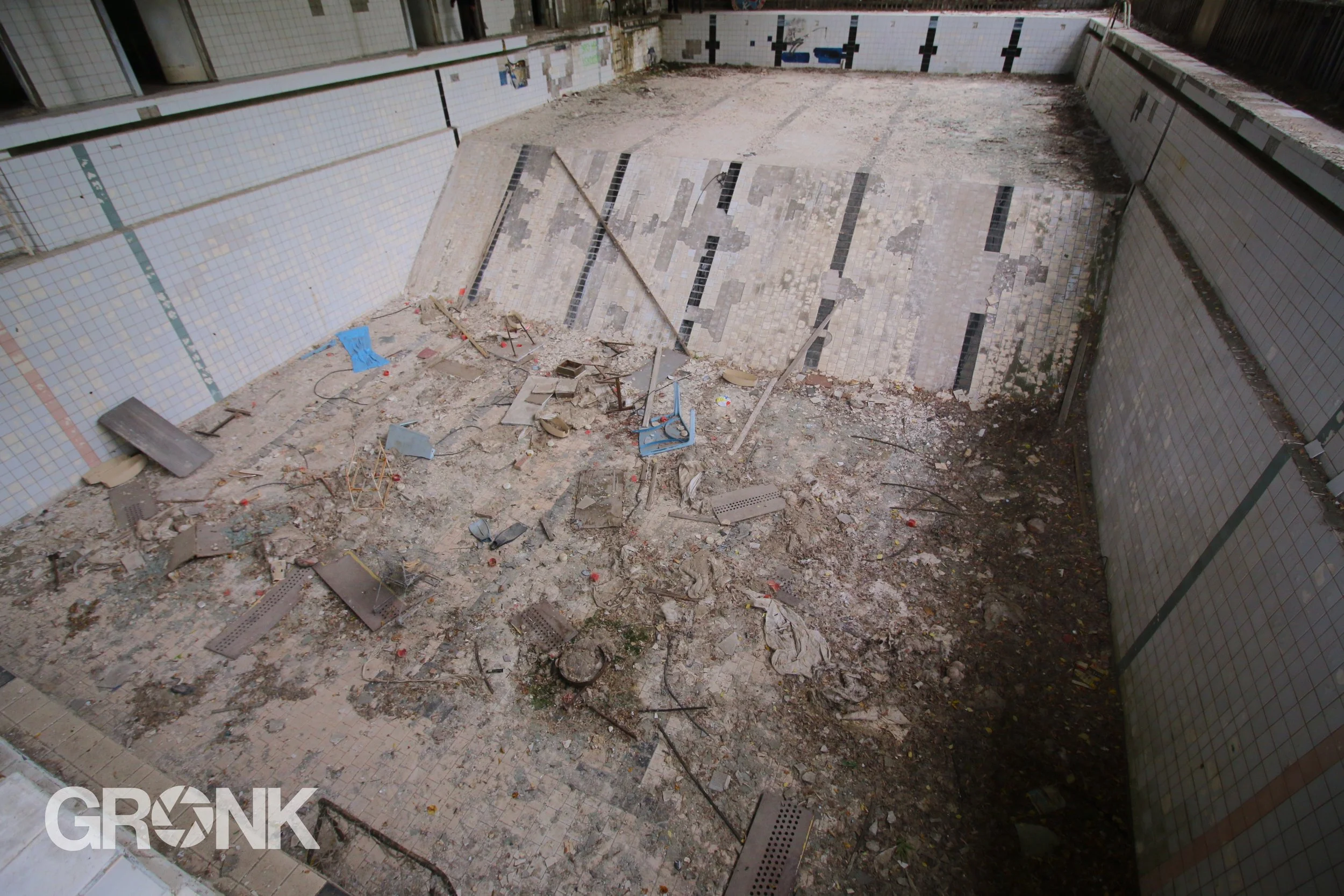
The facility was finally closed in 1998, when its maintenance ceased and its condition deteriorated beyond safe use. Since then, it has stood empty: windows shattered, tiles cracked, and the pool basin dry. Over time, Azure has become one of the most recognizable symbols of Pripyat’s abandonment. Its haunting interior appears in photographs, documentaries, and video games, representing both the city’s lost vitality and the enduring legacy of the Chernobyl disaster.