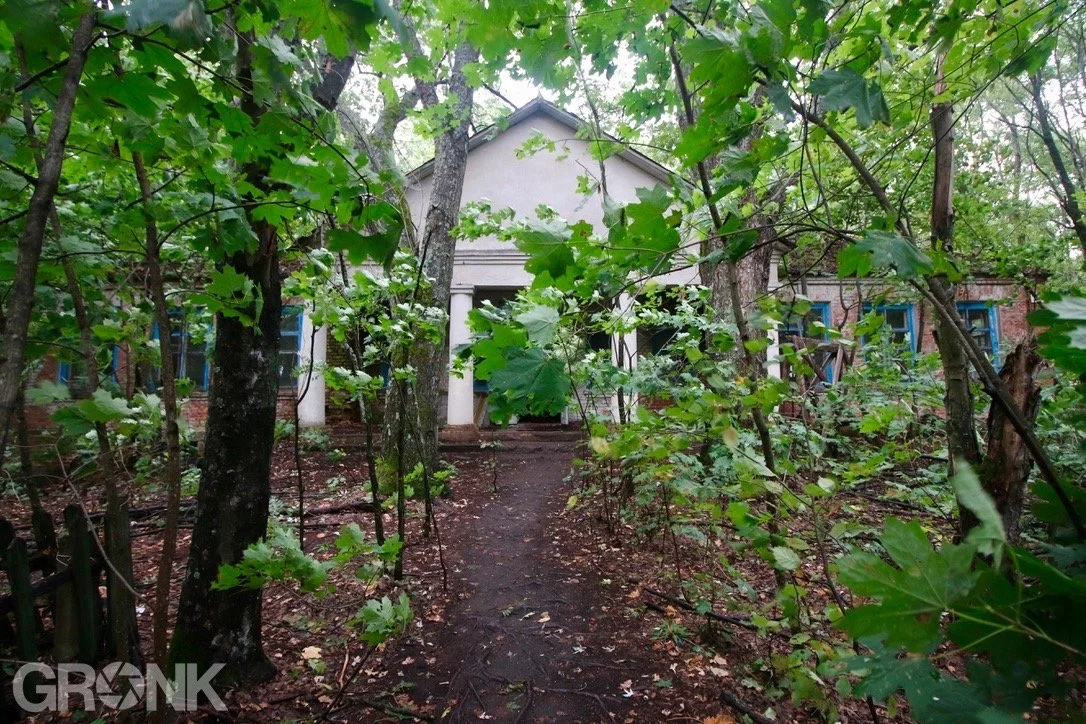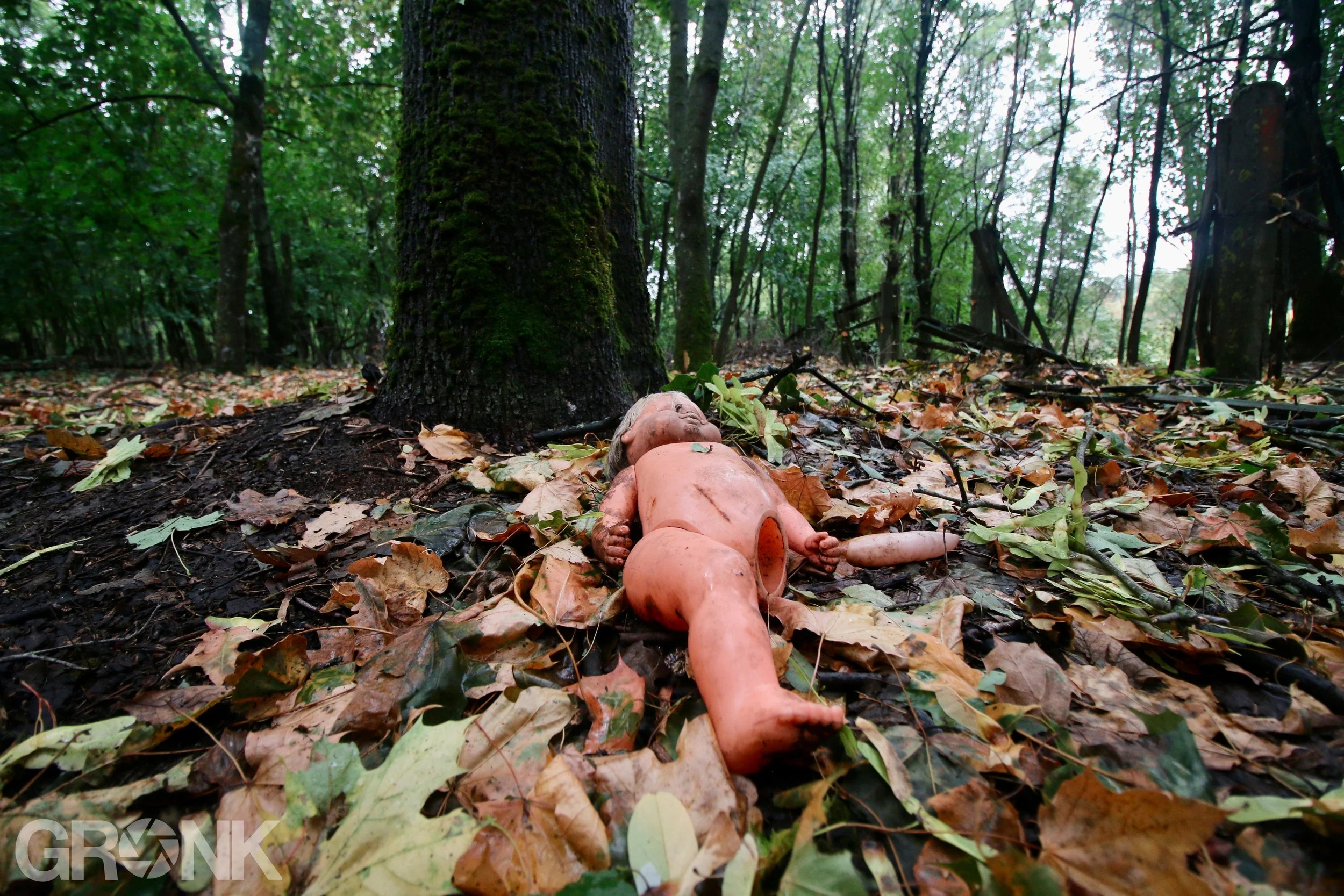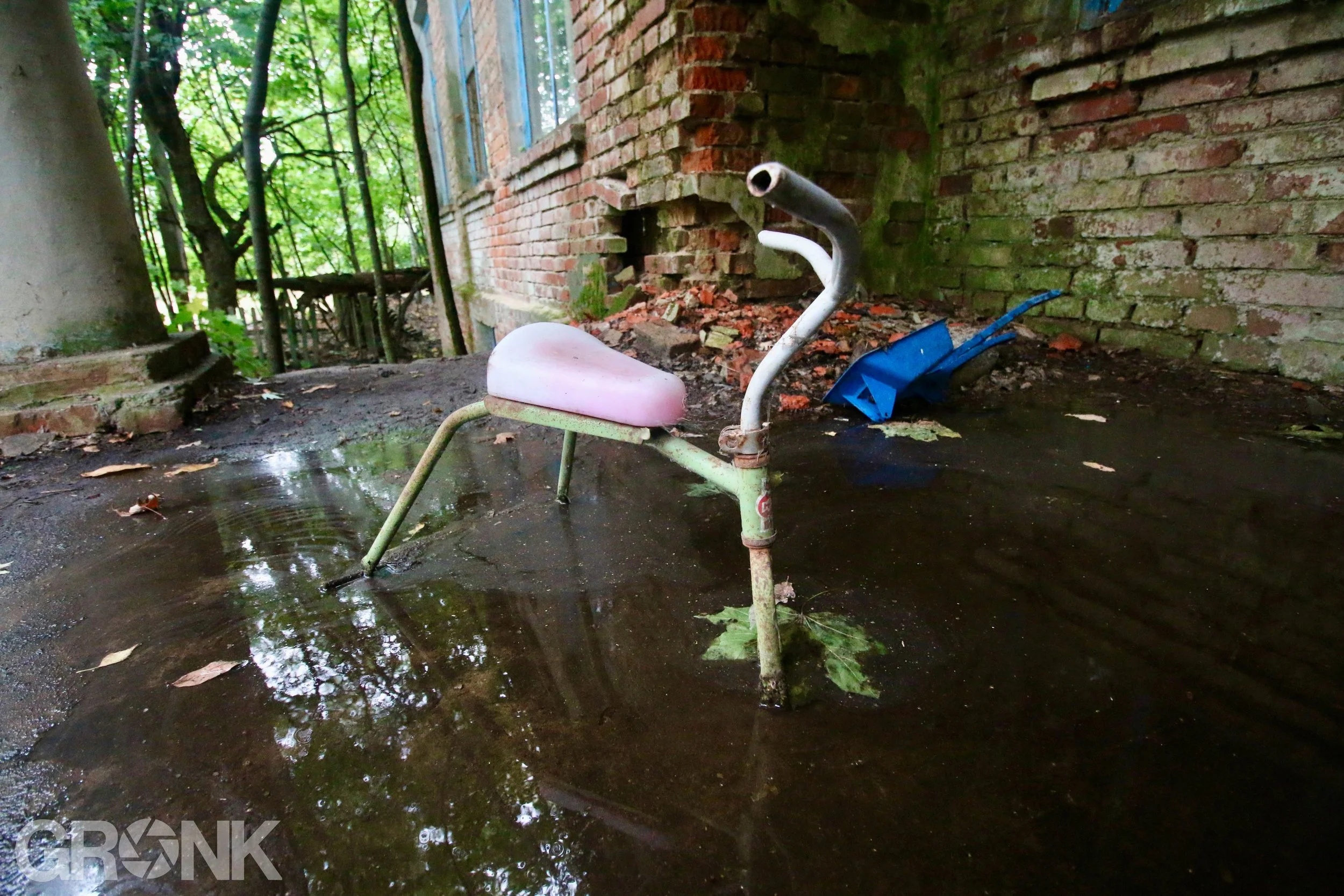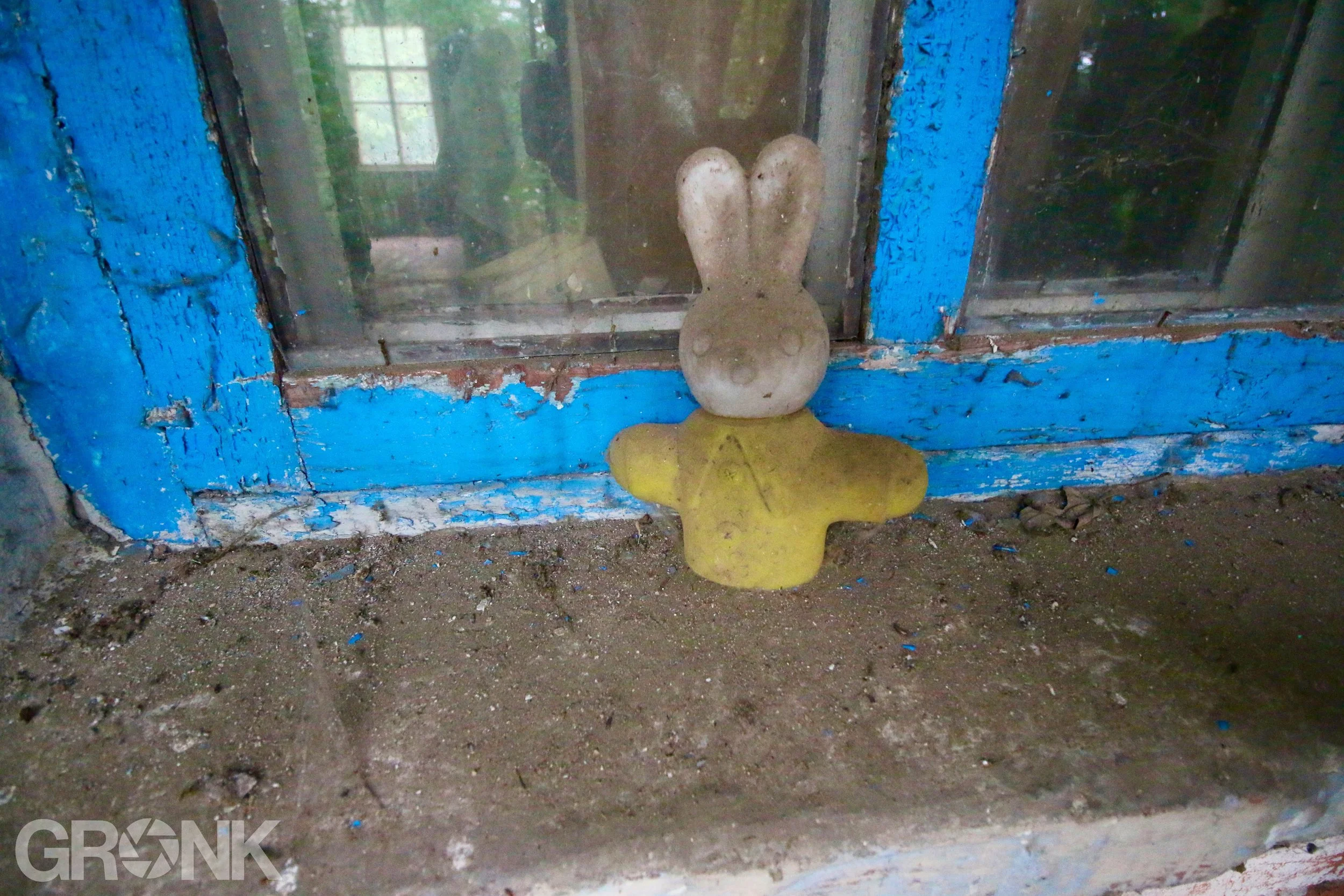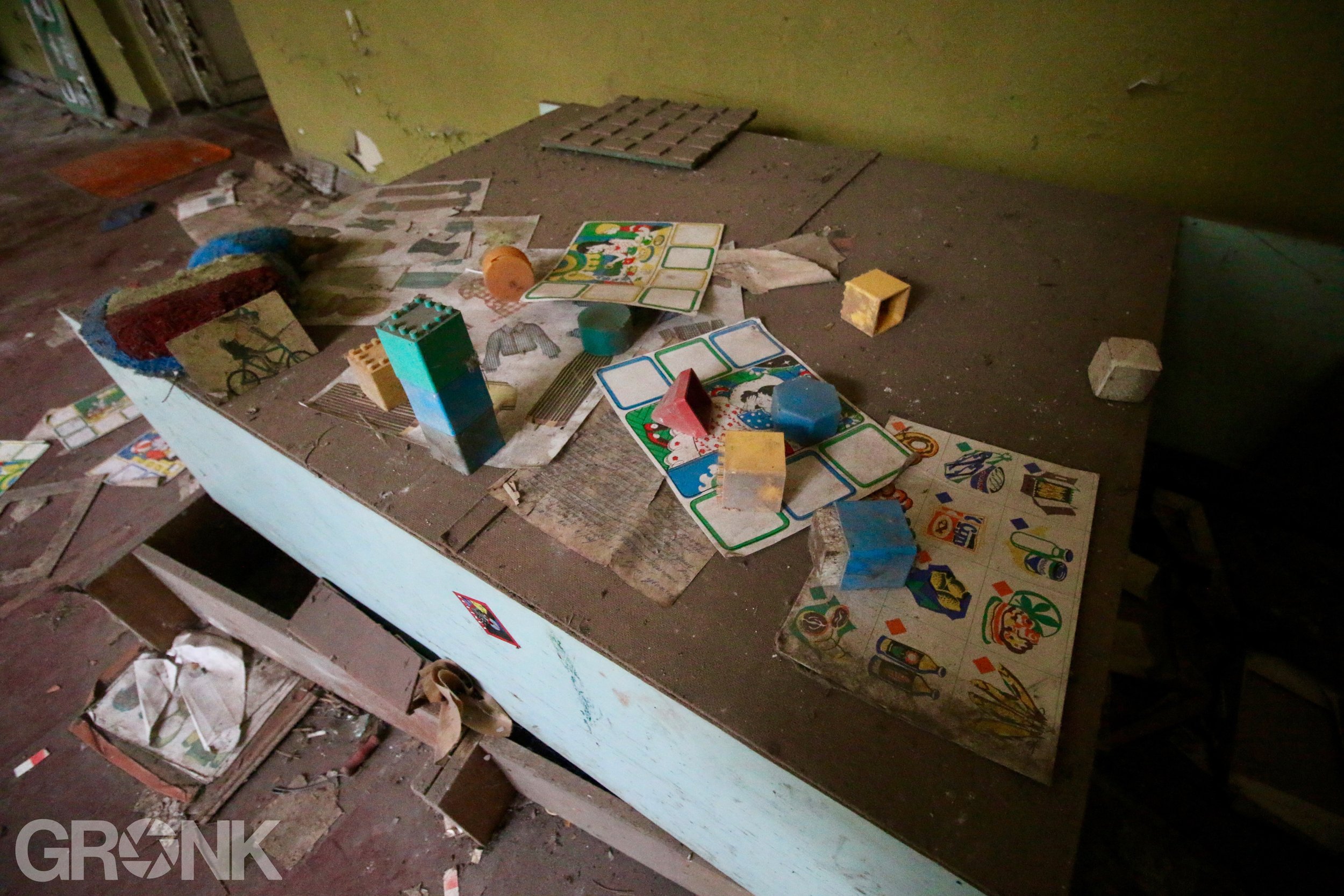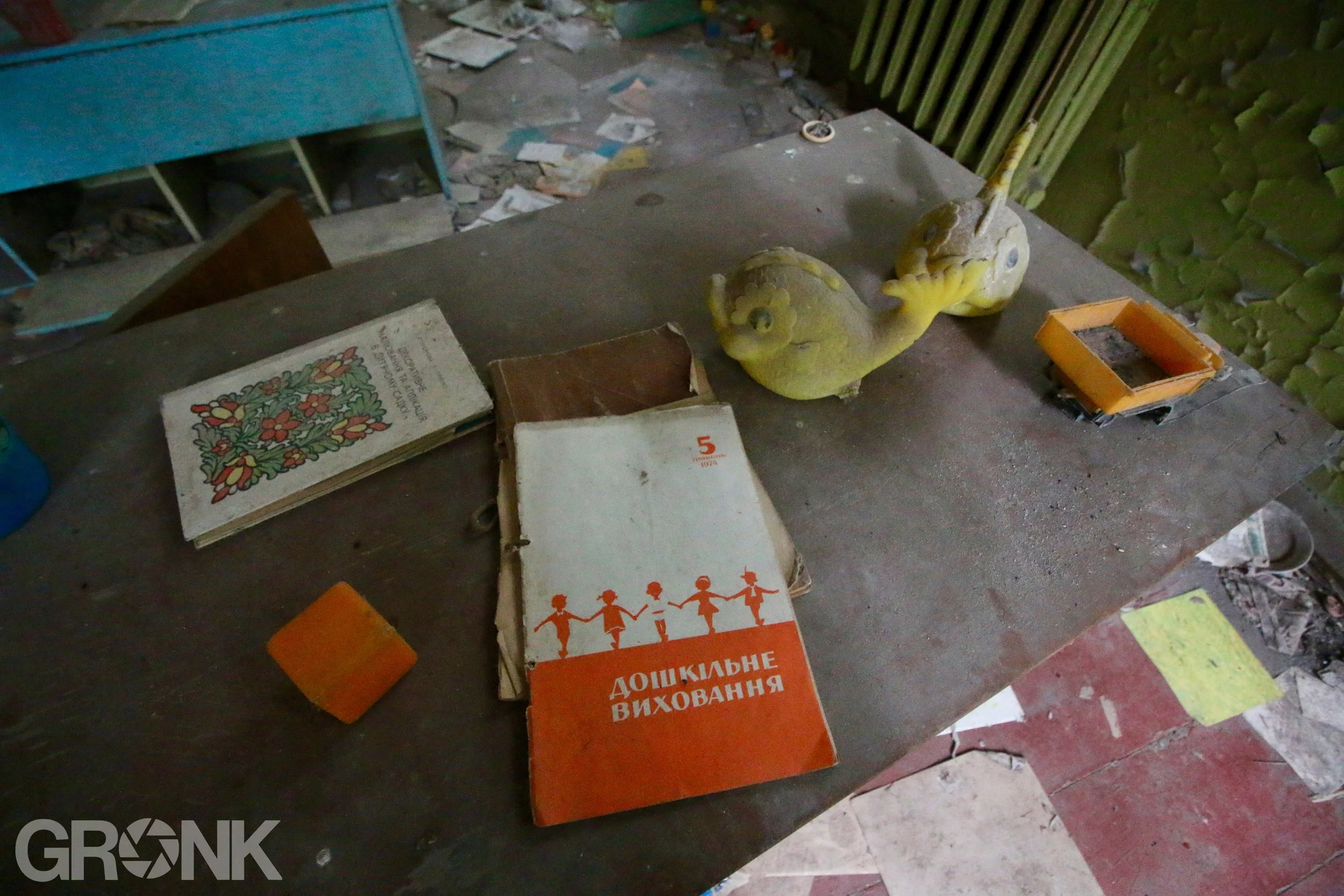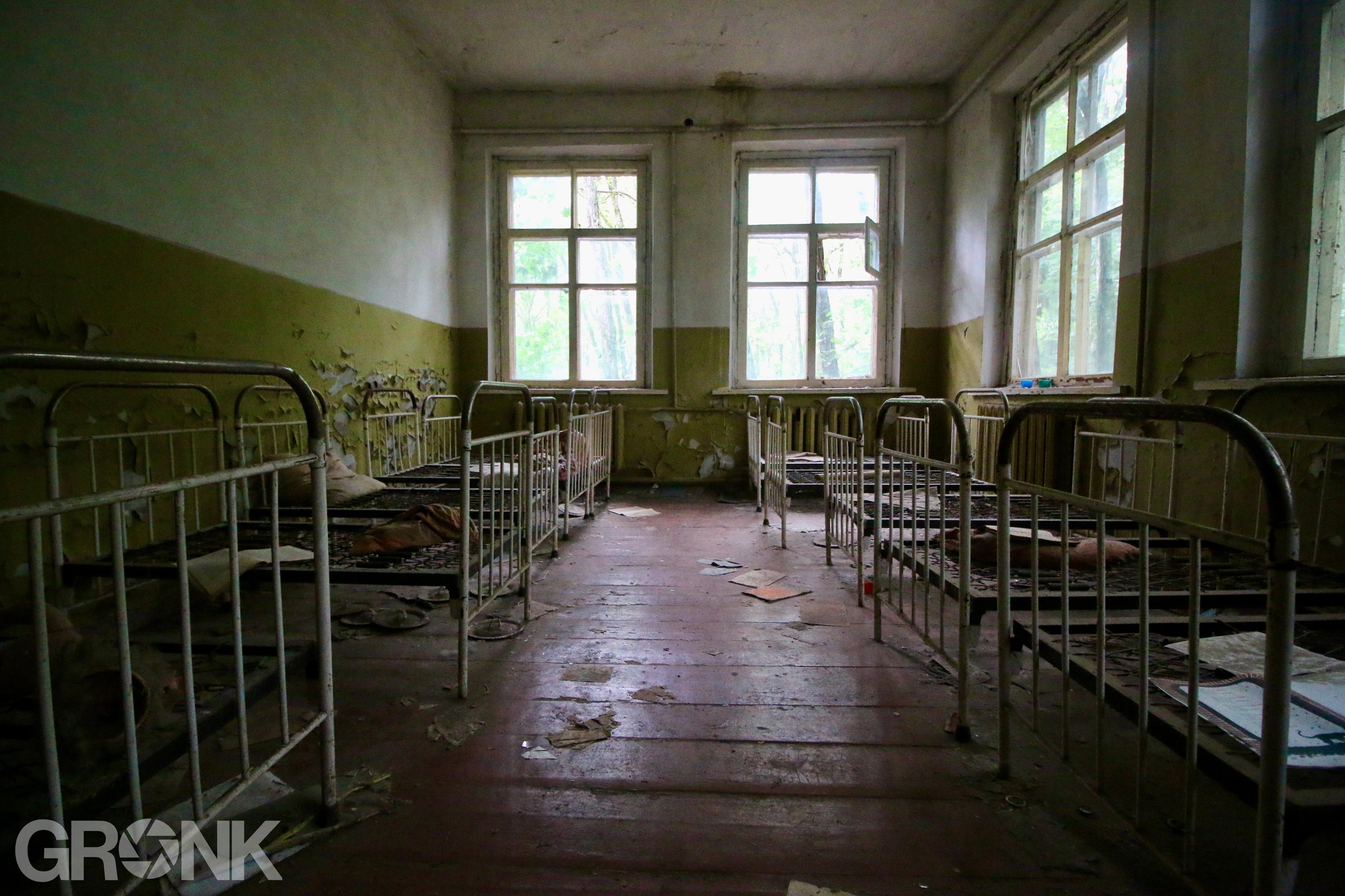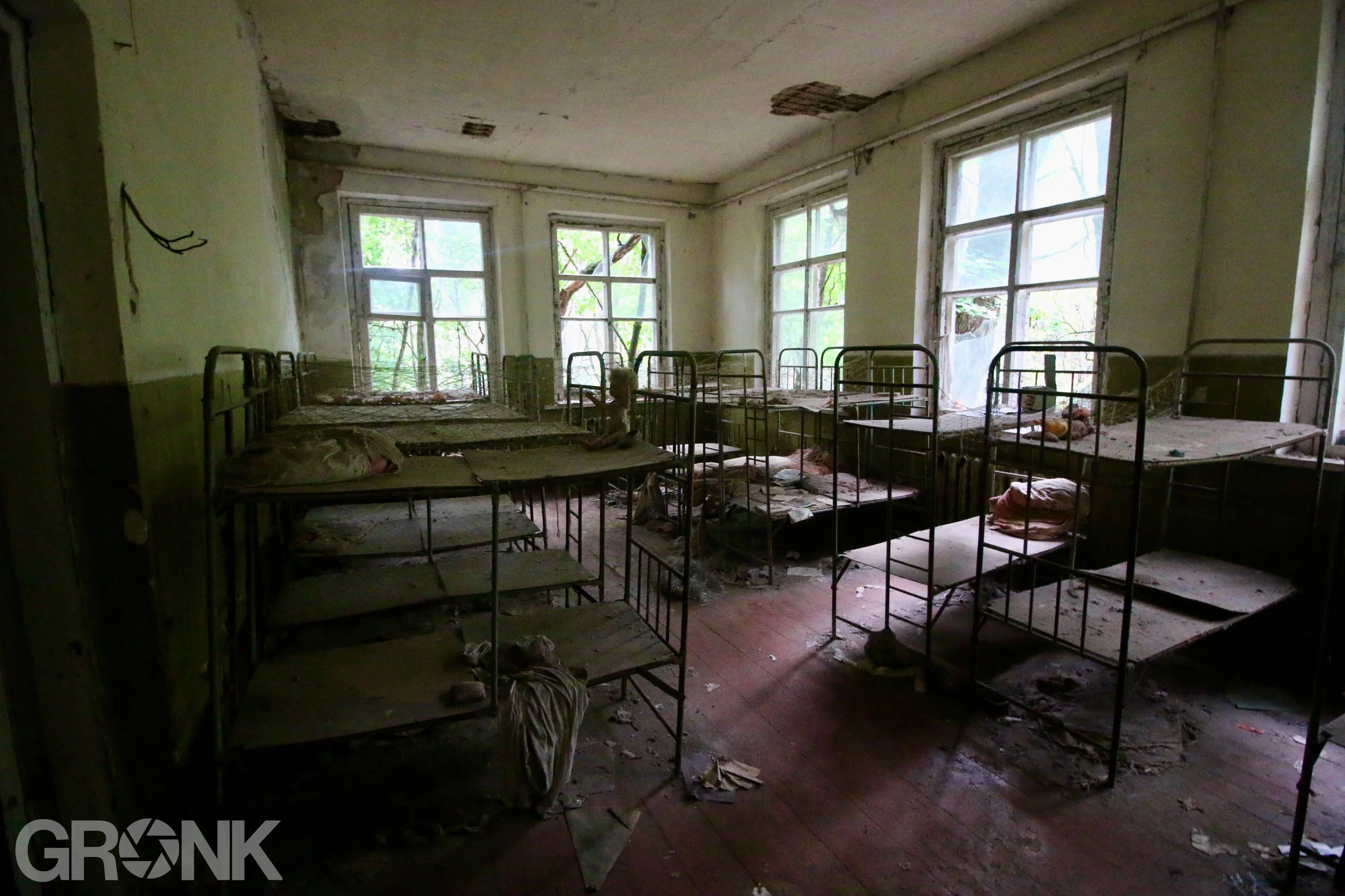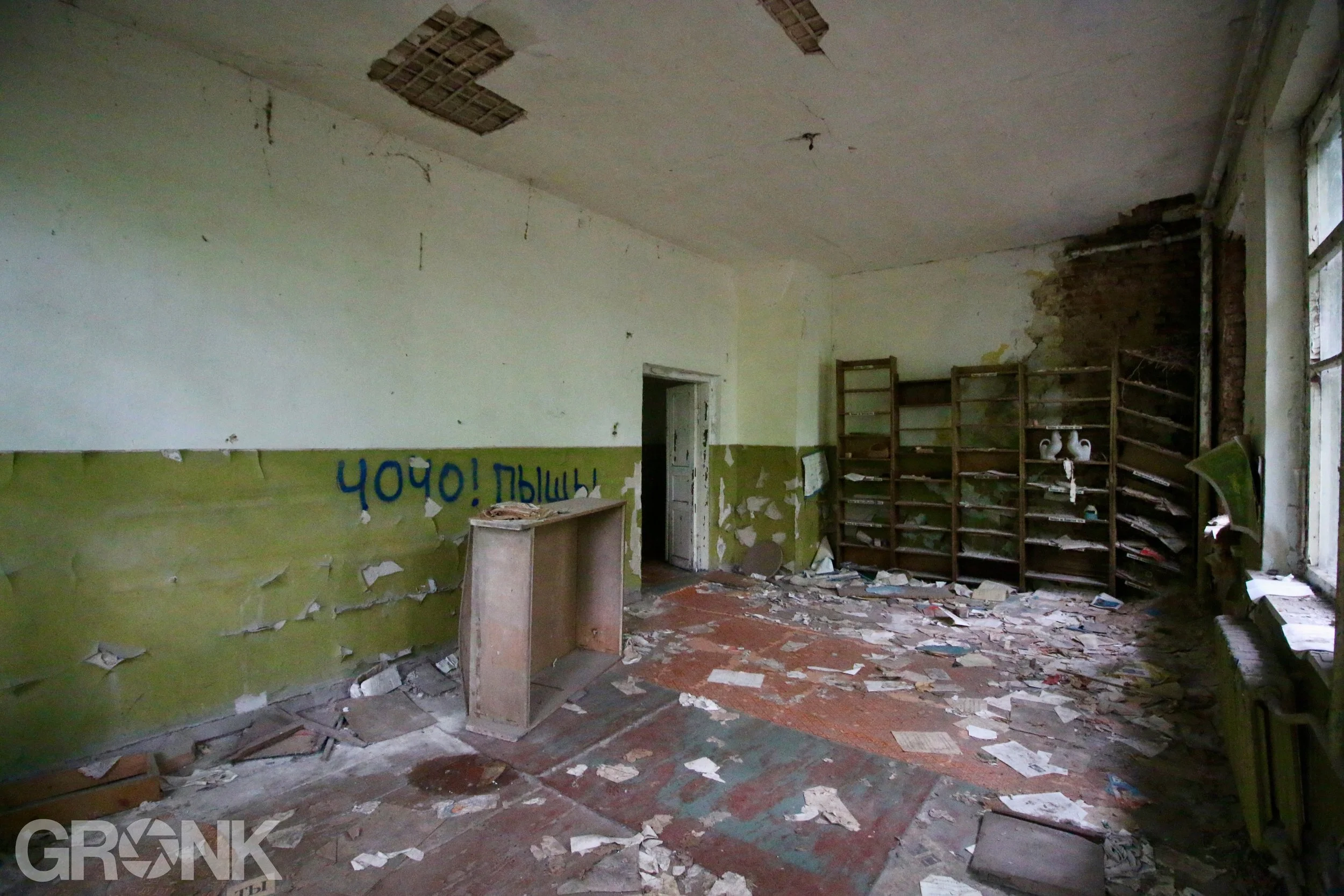
Kopachi village is situated just four kilometers south of the Chernobyl Power Plant, with its kindergarten positioned along the route connecting Pripyat and Chernobyl. In 1986, the village had a population of 1,114 residents. However, the catastrophic events of that year left Kopachi heavily contaminated with radioactive fallout. Today, only the kindergarten and the remnants of a machine and tractor station remain from the village. All other structures were systematically demolished and buried, one by one. A trench was excavated in front of the kindergarten, allowing the engineering demolition machine 'IMR-1' to dismantle and bury the homes. The government overlooked the potential danger of these contaminated buildings leaching radioactive isotopes into the groundwater.
Constructed in 1967, the kindergarten boasts a plaque on its facade that reads: 'Built in honor of the 50th anniversary of the Great October Revolution.' Its architecture stands out, showcasing a beautiful Palladian style in brick, quite different from the typical square Soviet designs found in Pripyat. Experts believe it may outlast the high-rise buildings of Pripyat. Inside the kindergarten, visitors can find children's lockers filled with toys on one side of the hall, while the opposite side features a space for parents. As you explore the corridors, you can access two bedrooms and a library. The surviving kindergarten building in Kopachi, along with its interior, was featured in the documentary "Life after People," which included a segment on the city of Pripyat. Remarkably, the kindergarten withstood a nearby forest fire in 2020.