Silverdale Railway Tunnel
In 1846, the North Staffordshire Railway got the green light to build a branch from its main line north of Stoke, which went through Newcastle-under-Lyme. A bit of it even ran on top of Robert Heathcote’s canal. But, the guy who owned the iron works in Silverdale, Ralph Sneyd, figured this wouldn't really help his business, so he decided to build his own line going south to Pool Dam. This new line, called the Silverdale & Newcastle-under-Lyme Railway, opened in 1850 and just two years later, it connected with the North Staffordshire branch at Knutton Junction. In 1854, they added a 1km stretch to get to the head of the Newcastle Canal, where they could transport coal, iron, and ironstone. At first, they used horses to pull it. Then, in 1856, they added another 1½ miles to the line with the Apedale branch, which went to nearby coal mines. The North Staffordshire Railway took over everything after they made the Silverdale & Newcastle-under-Lyme Railway a public railway in August 1859.
To make it easier to get into Shropshire, they planned to build a 12½-mile stretch into the area of the Great Western at Market Drayton. This move was meant to block the Great Western's plans to get to Manchester. They got the okay in July 1864 and opened it on February 1st, 1870. It cost the company £216,926 to build, a lot of which was spent on two tunnels at the end.
Even though it was built for two tracks, they only had one track between Silverdale and Pipe Gate by October 1934. But, after the government took over, there was a big increase in freight traffic, hitting a high of 10,000 tonnes per week in 1962/3. By then, passenger trains had stopped running, but they still used the line for moving minerals until Silverdale Colliery closed down in December 1998.
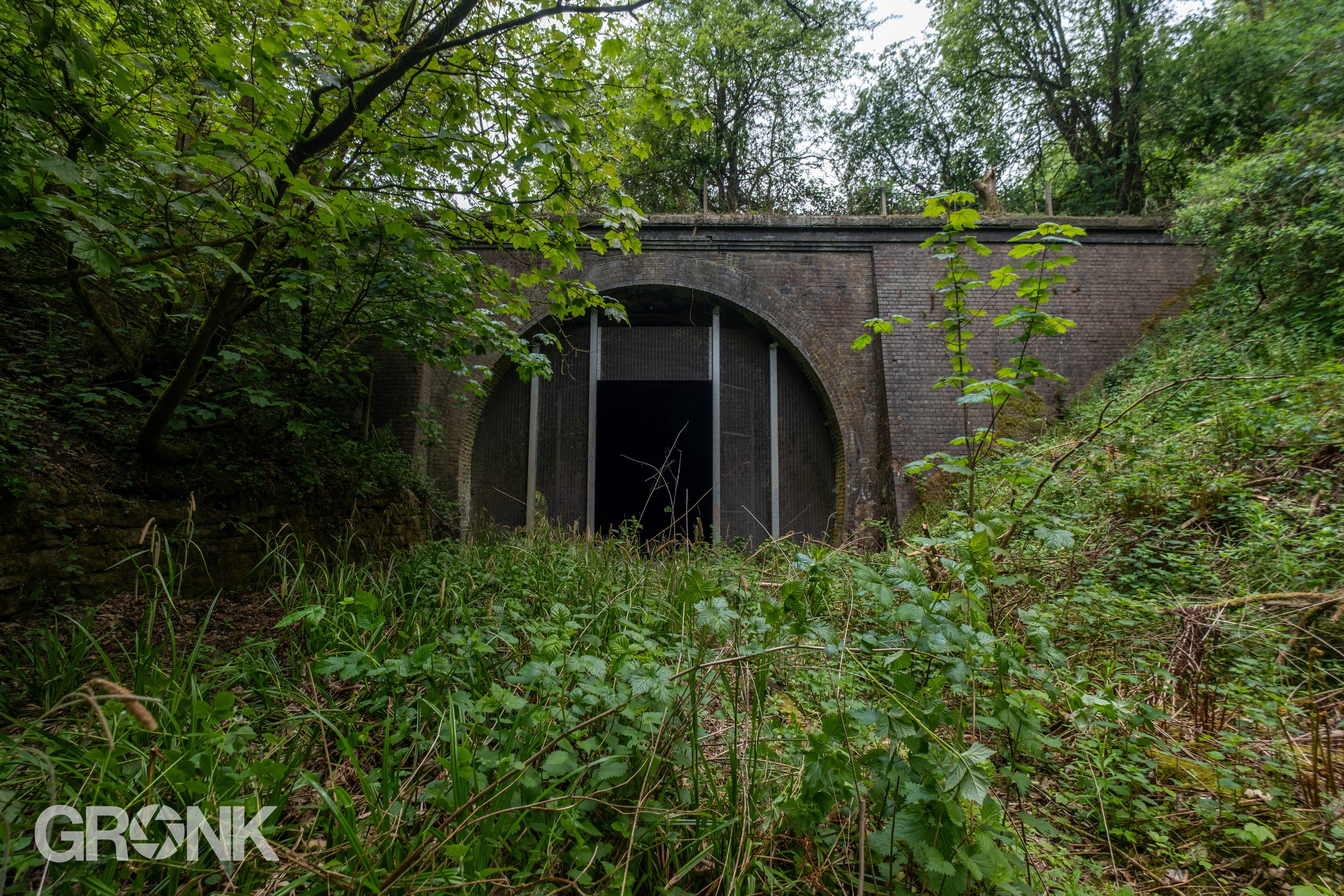
The tunnel at Silverdale is pretty straight and goes for 620 metres. It's still used as a single track, but the part between the tunnel and where the old station used to be was taken out in 2009. The eastern side of the tunnel has gradually sloping sides and isn't too deep. At the end, there's a simple entrance made of engineering bricks, with buttresses on either side and brickwork details on the top. There are also seven support bars in the brick ring, held down with pattress plates, and they're from 1996.
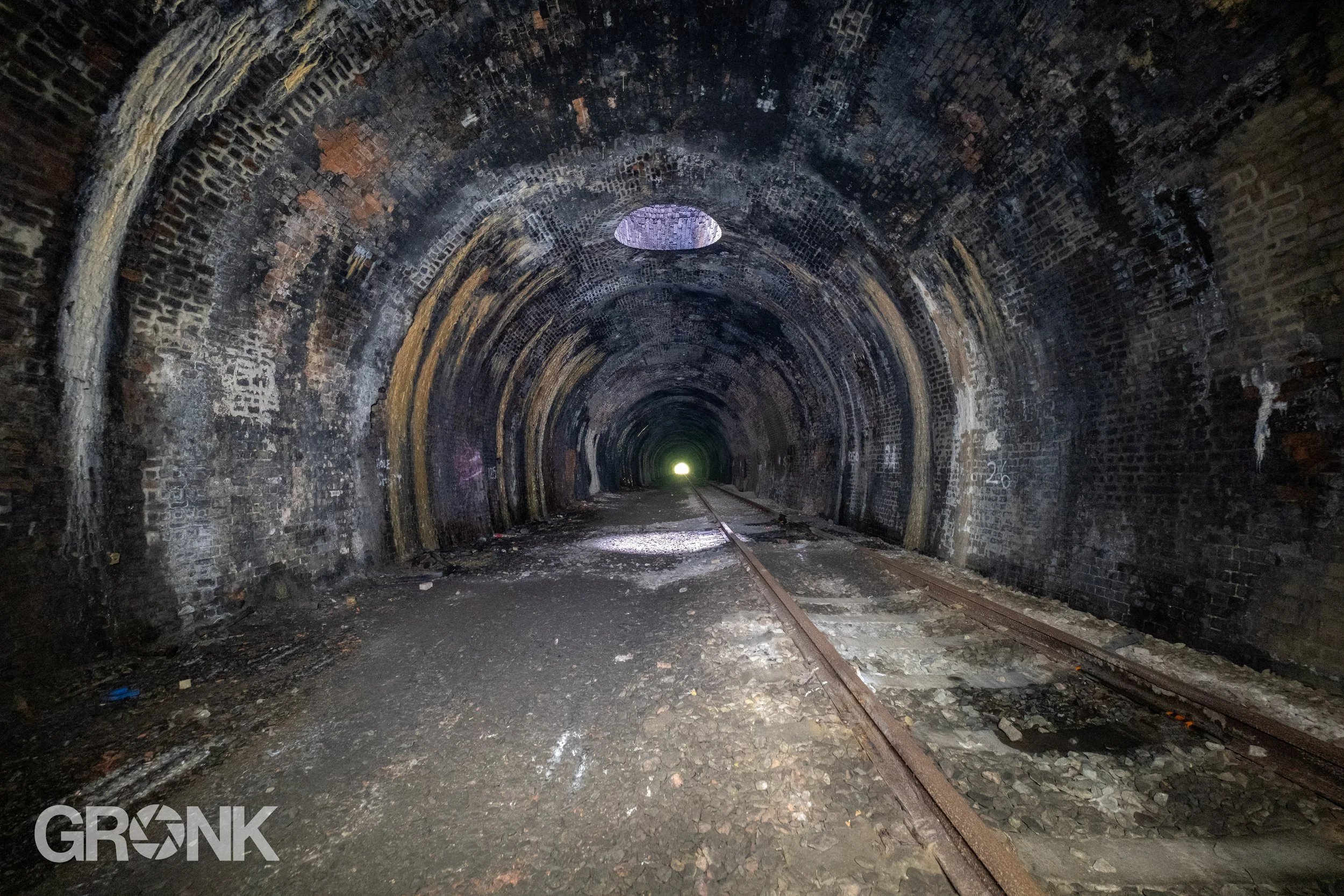
Inside, the walls are made of red brick. The corners where the sections meet are really noticeable, probably because water has washed away the soot that built up over time. There are a few spots where the brick has cracked and been fixed up. There are shelters here and there, but not many.
A lot of minerals have formed, especially on the south side because of water getting in. There are pipes that let out the pressure behind the walls, and a drain goes down the middle of the tunnel, with three openings at the top.
There's also a single 3-meter wide opening for air, made of brick, about 400 metres from the eastern end. The structure around it is still in good shape, standing out in a field to the south of Pepper Street.