Walton Tunnel, Liverpool
In 1873, the Cheshire Lines Committee (CLC) acquired land at Huskisson, north of Liverpool, to build a goods station within the developing docks complex. To access the site, two routes were considered: one beneath the city centre, and a second— at 11.25 kilometres —skirting the eastern edge of Liverpool from Halewood. The latter, costing an estimated £600,000, was significantly cheaper and approved by Parliament in July 1874, along with a revenue-sharing agreement between the Midland, Great Northern, and Manchester, Sheffield & Lincolnshire Railways. From a triangular junction at Fazakerley, one branch ran north to Aintree (later extended to Southport), while another turned southwest to the docks—together forming the North Liverpool Extension Lines, built by contractors Kirk and Parry.
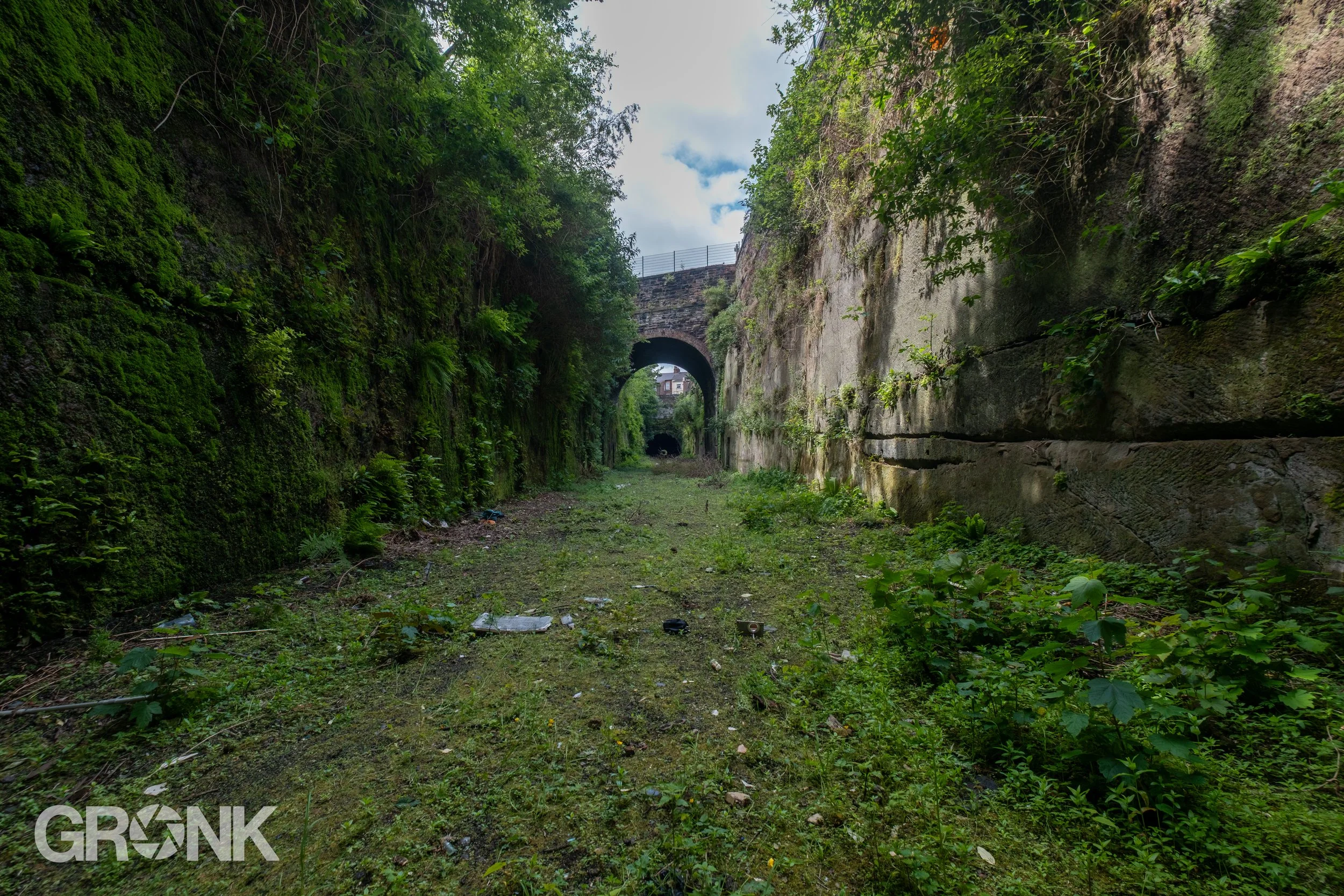
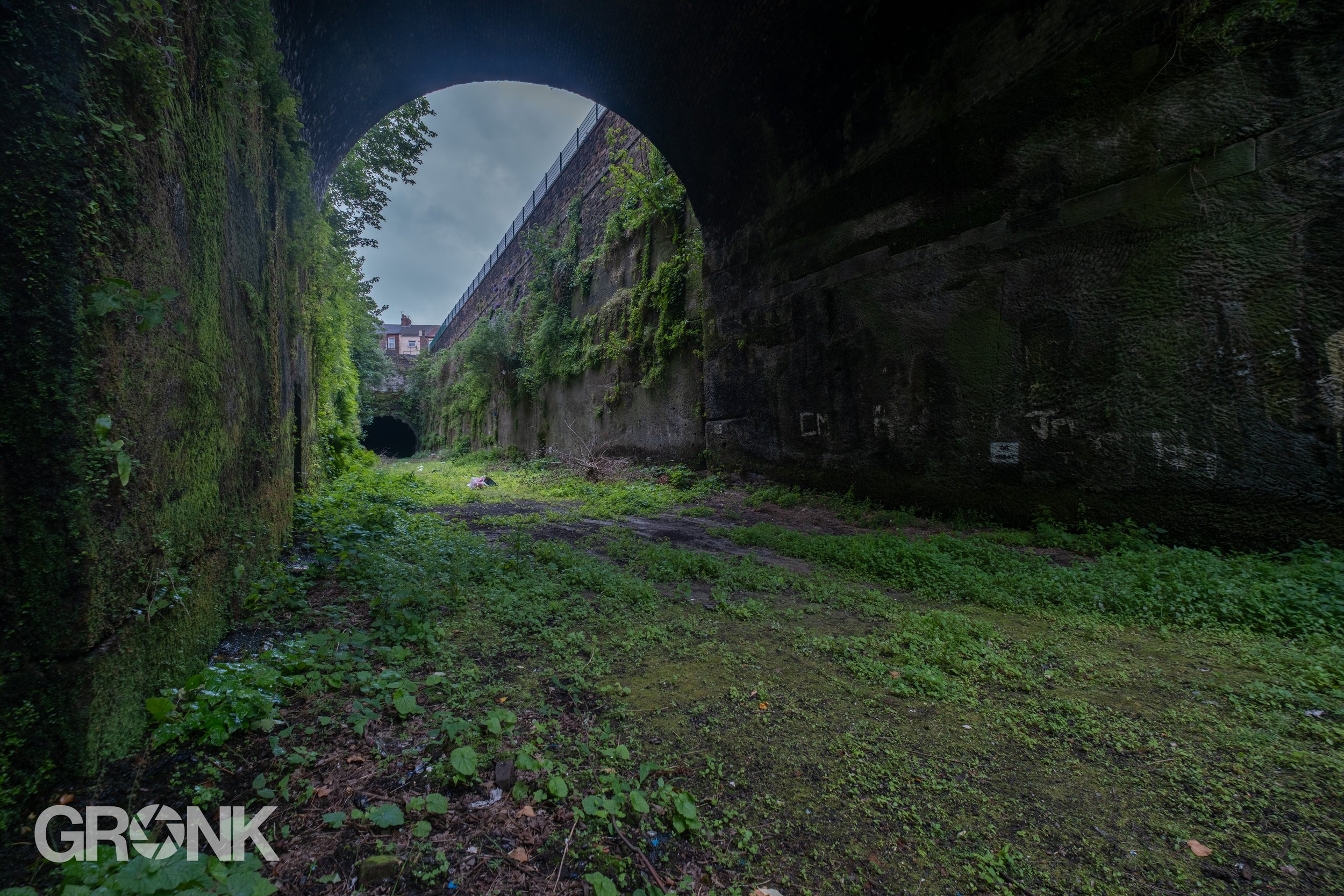
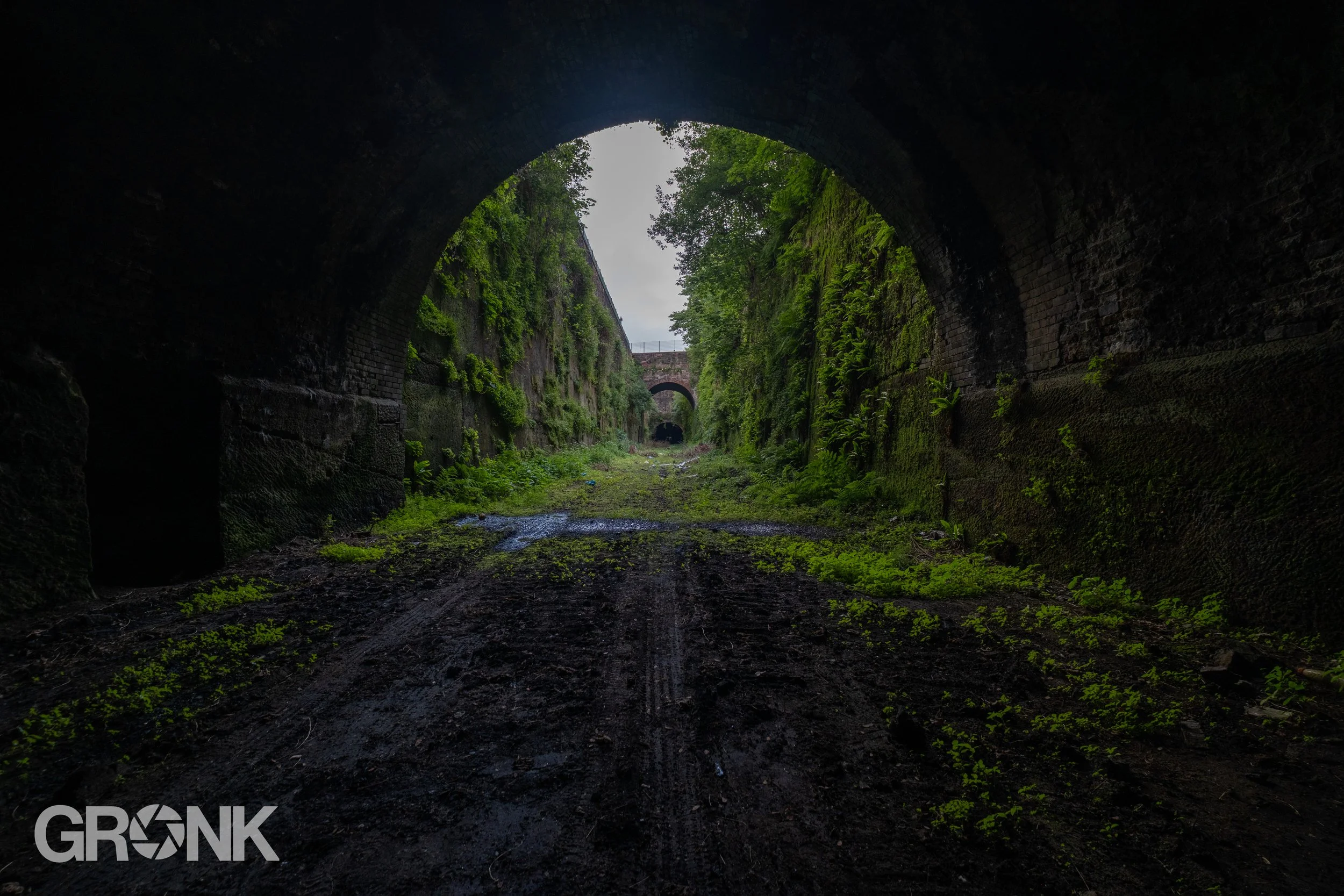
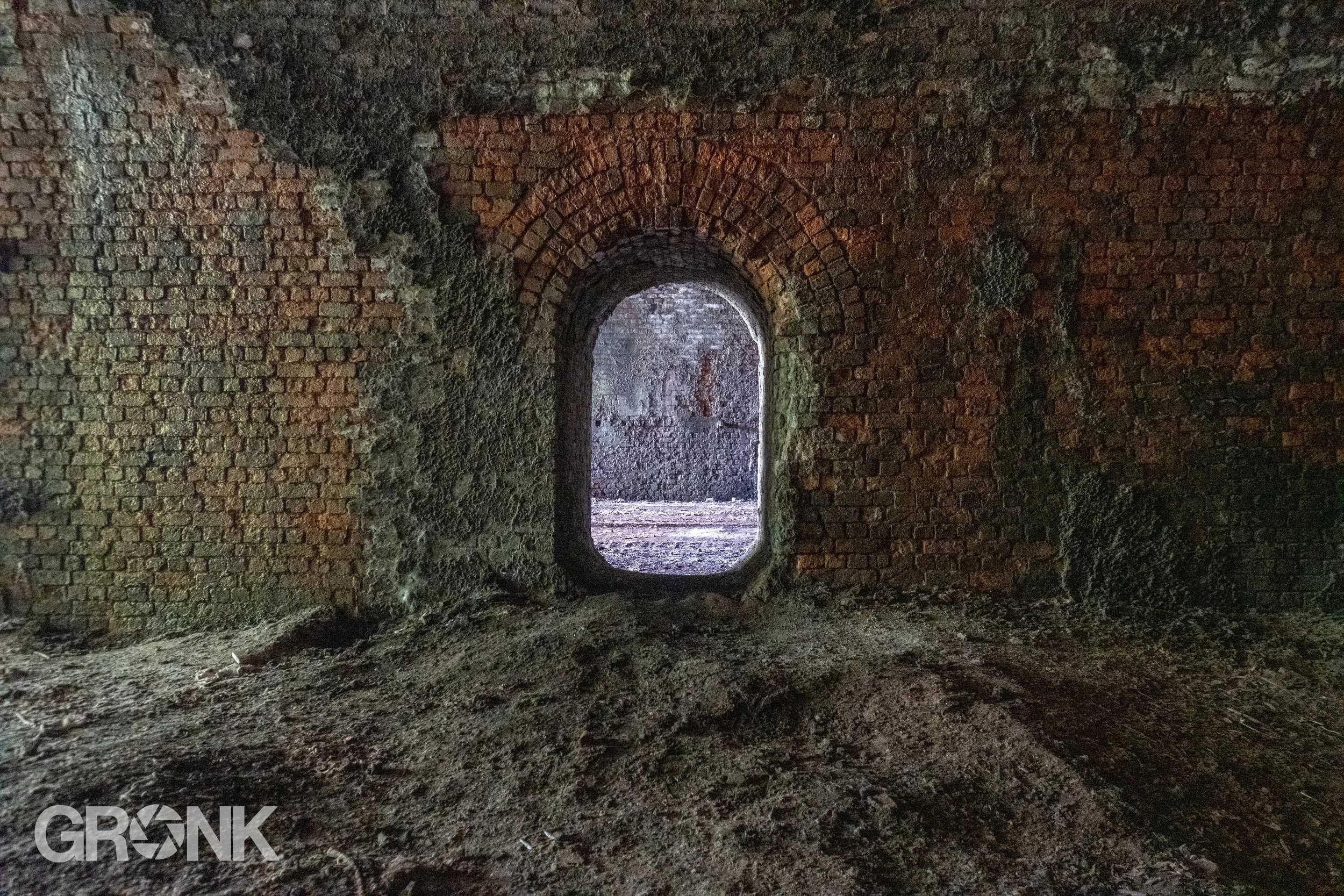
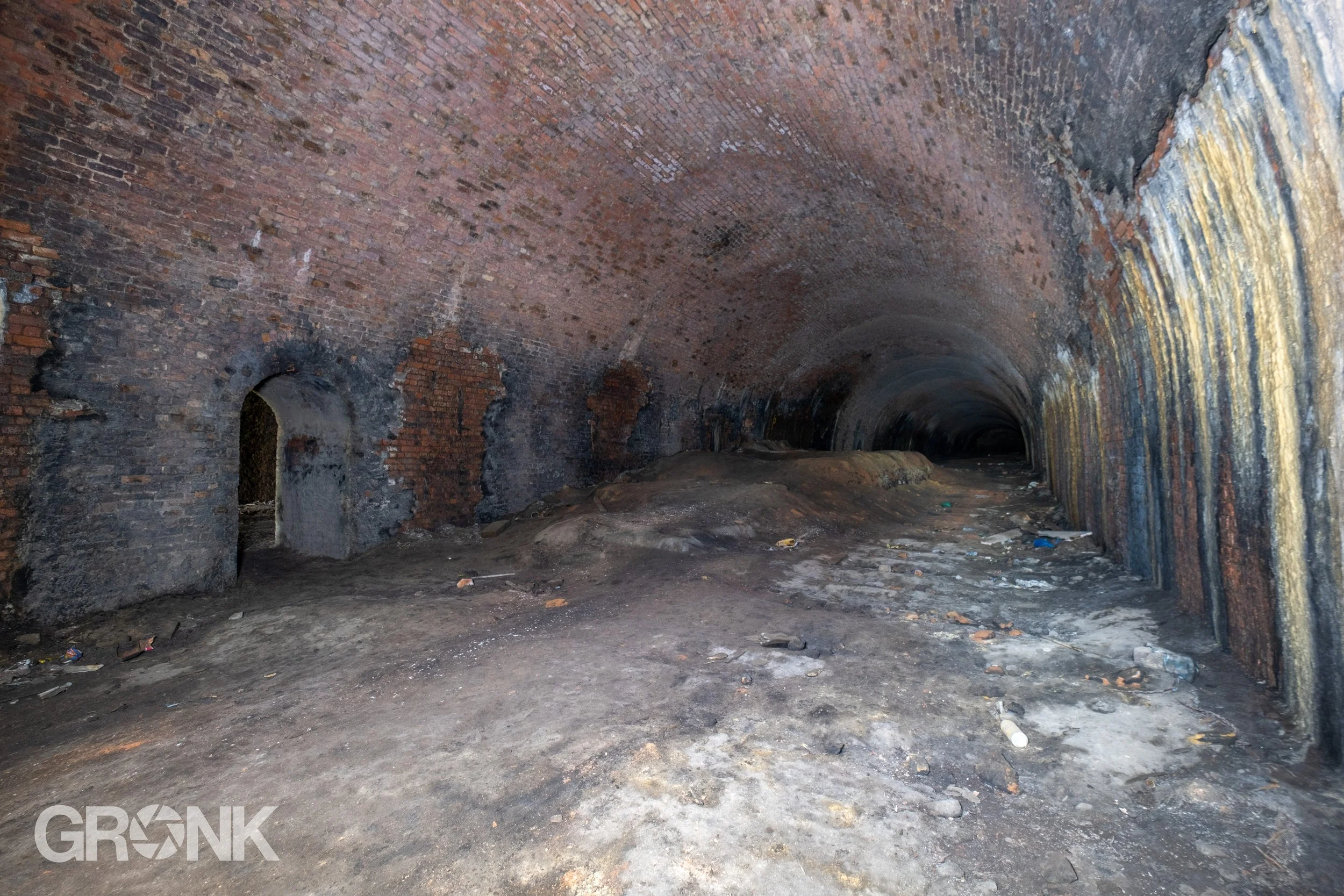
Construction began in September 1875. While much of the route was straightforward, the final stretch to Huskisson required three tunnels through sandstone, separated by deep cuttings, following Walton-on-the-Hill Station. The first tunnel, 209 metres long, passed under Breeze Hill. The second, the longest at 588 metres, ran beneath Bedford Road. After a short cutting, the third, 226 metres long, emerged near Kirkdale Station. Designed for four tracks—though only two were initially laid—the line included preparations for twin bores beside Tunnels 1 and 3. These secondary chambers were accessed via archways in the main tunnels.
The line opened to Walton-on-the-Hill Station on 1 December 1879, with through access to Huskisson following on 1 July 1880. Passenger services, introduced shortly after, proved unsuccessful and were withdrawn beyond Walton by 1885. The line was heavily rationalised in the 1960s and closed officially on 17 June 1975. Track removal occurred in 1979–80. In the 1960s, Merseyrail’s proposed Orbital Outer Loop considered using the Walton-on-the-Hill tunnels, but plans later favoured the North Mersey Branch between Aintree and Bootle.
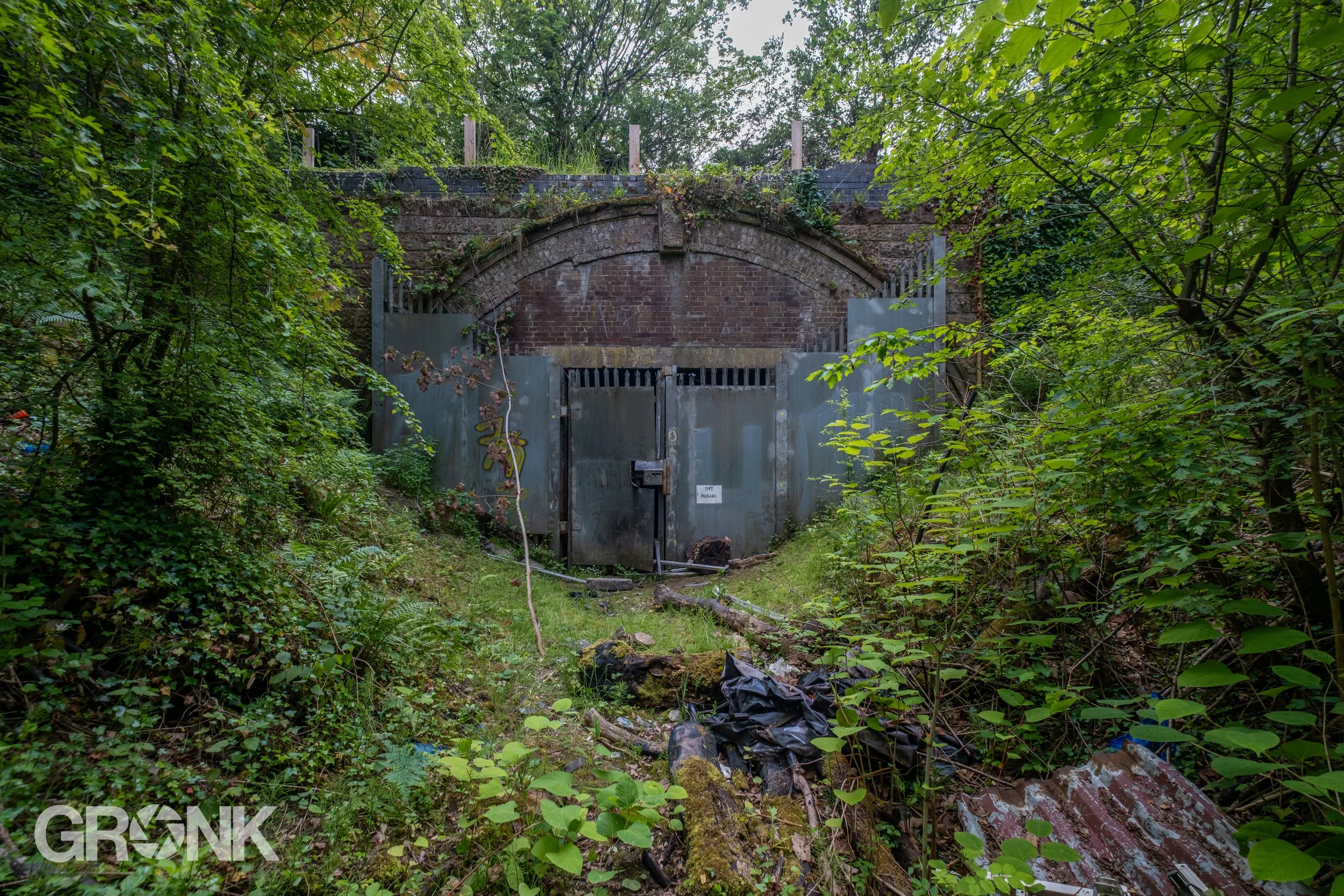
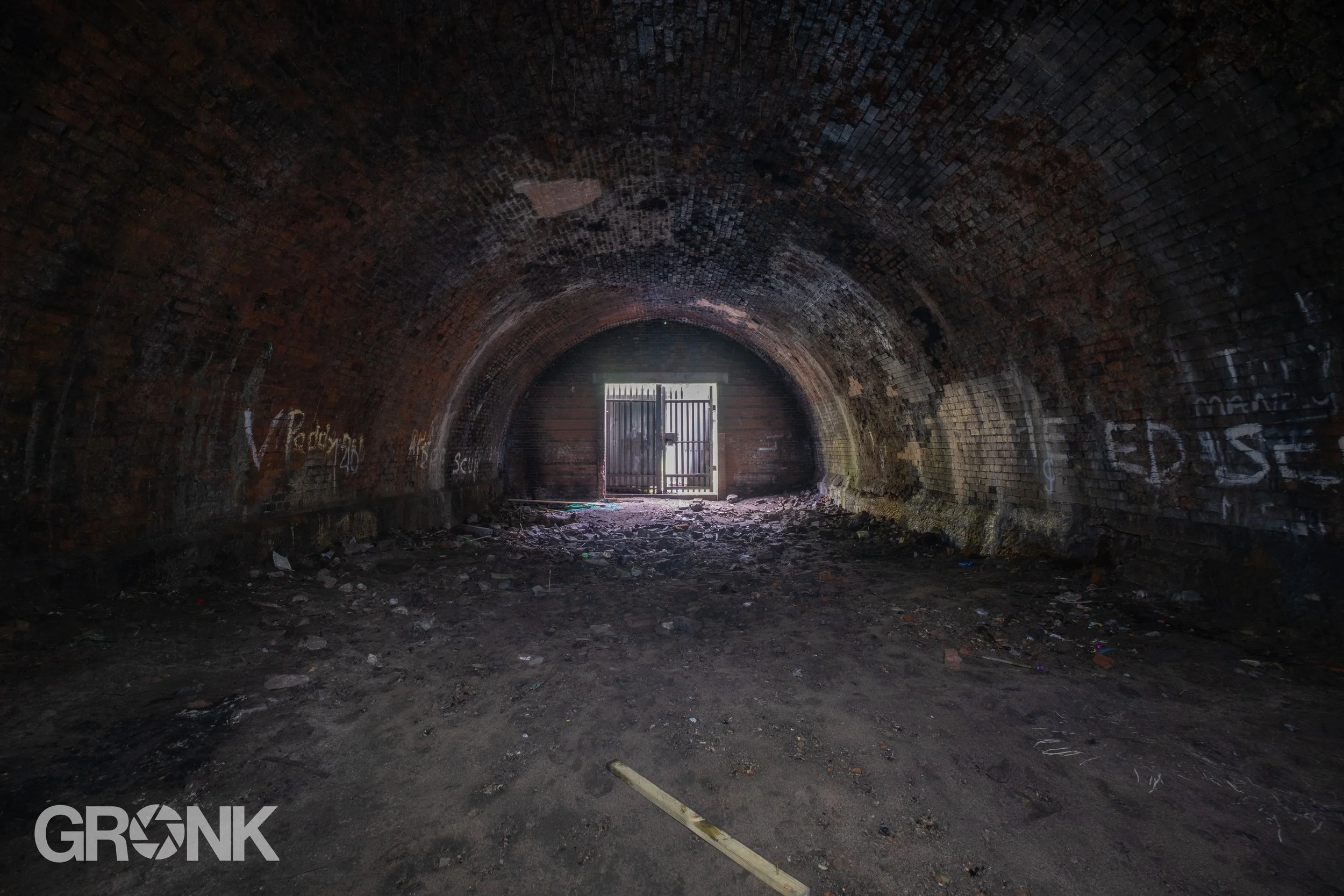
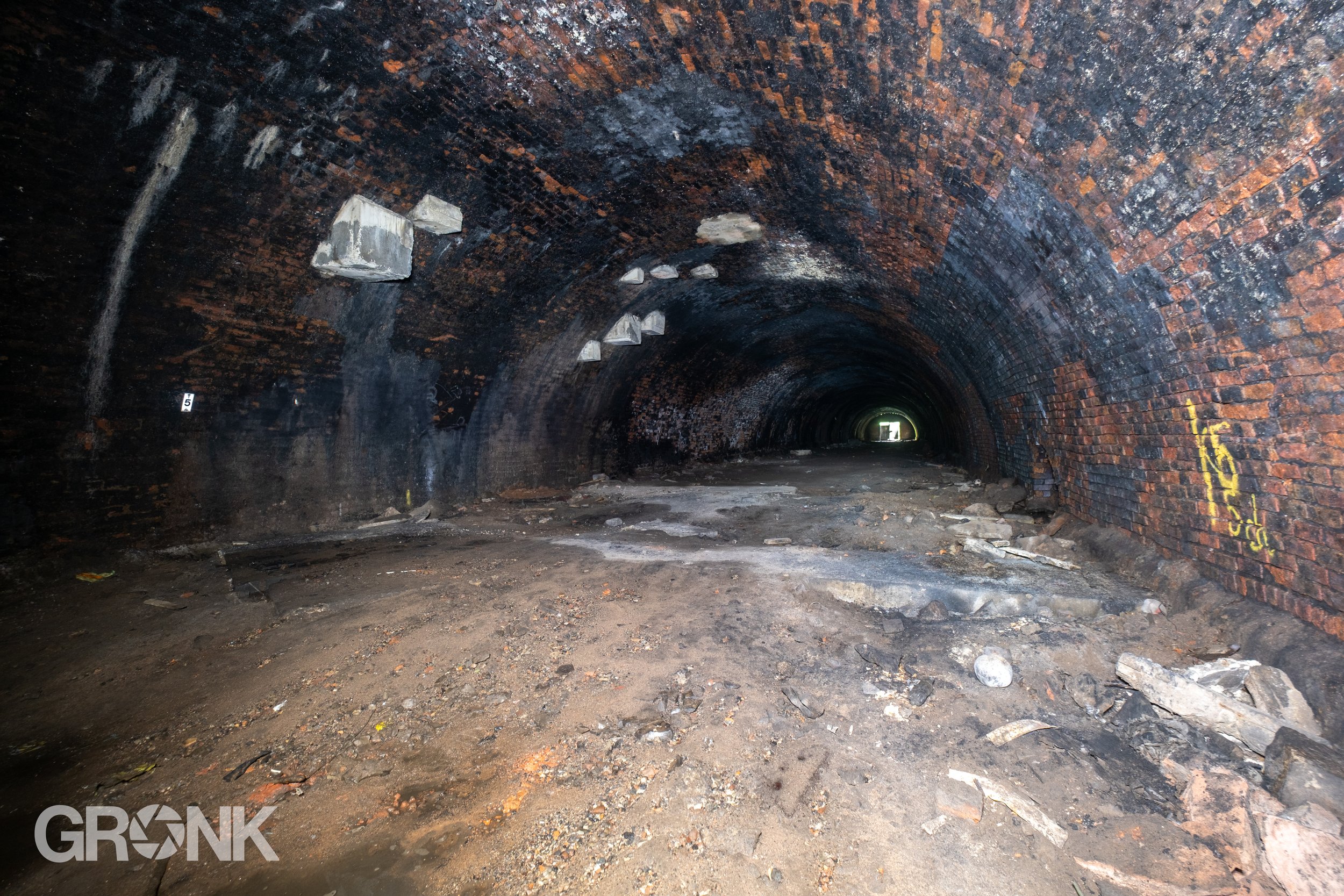
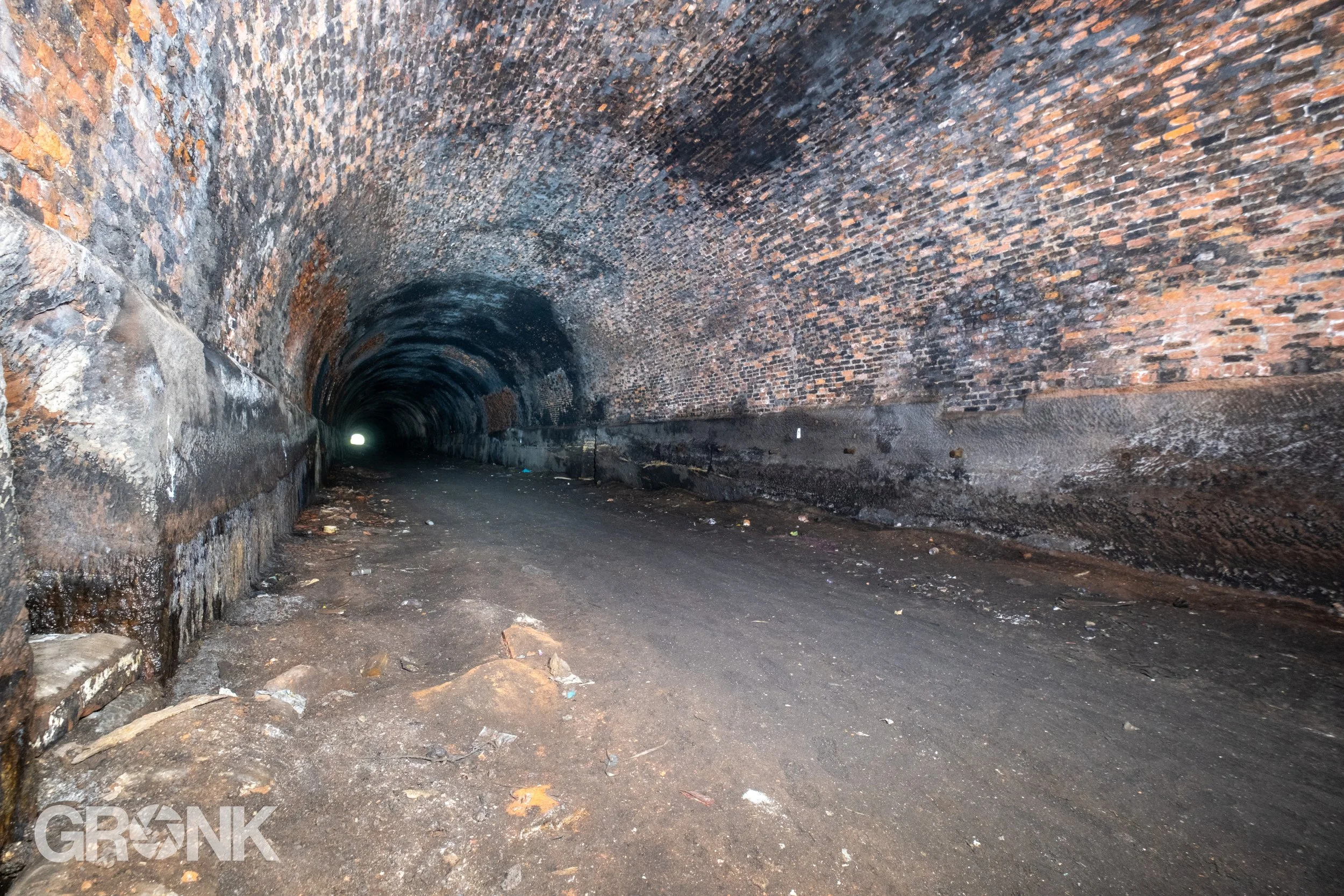
Today, the north portal of Tunnel No.1 is sealed by a block wall and steel-clad fencing. Internally, the floor has been raised—likely for drainage—and brick arches spring from sandstone ledges, typical of Liverpool’s tunnel design. Around 90 metres in, concrete beams supporting the Queen’s Drive flyover pierce the brickwork. Evidence of patch repairs indicates long-standing structural issues. An incomplete secondary bore branches off via a refuge, ending abruptly in sandstone. Its poor-quality brickwork is heavily mortared. Another chamber lies near the southern end, where the portal has been partly rebuilt in red and blue brick above exposed rock and a two-tier retaining wall.
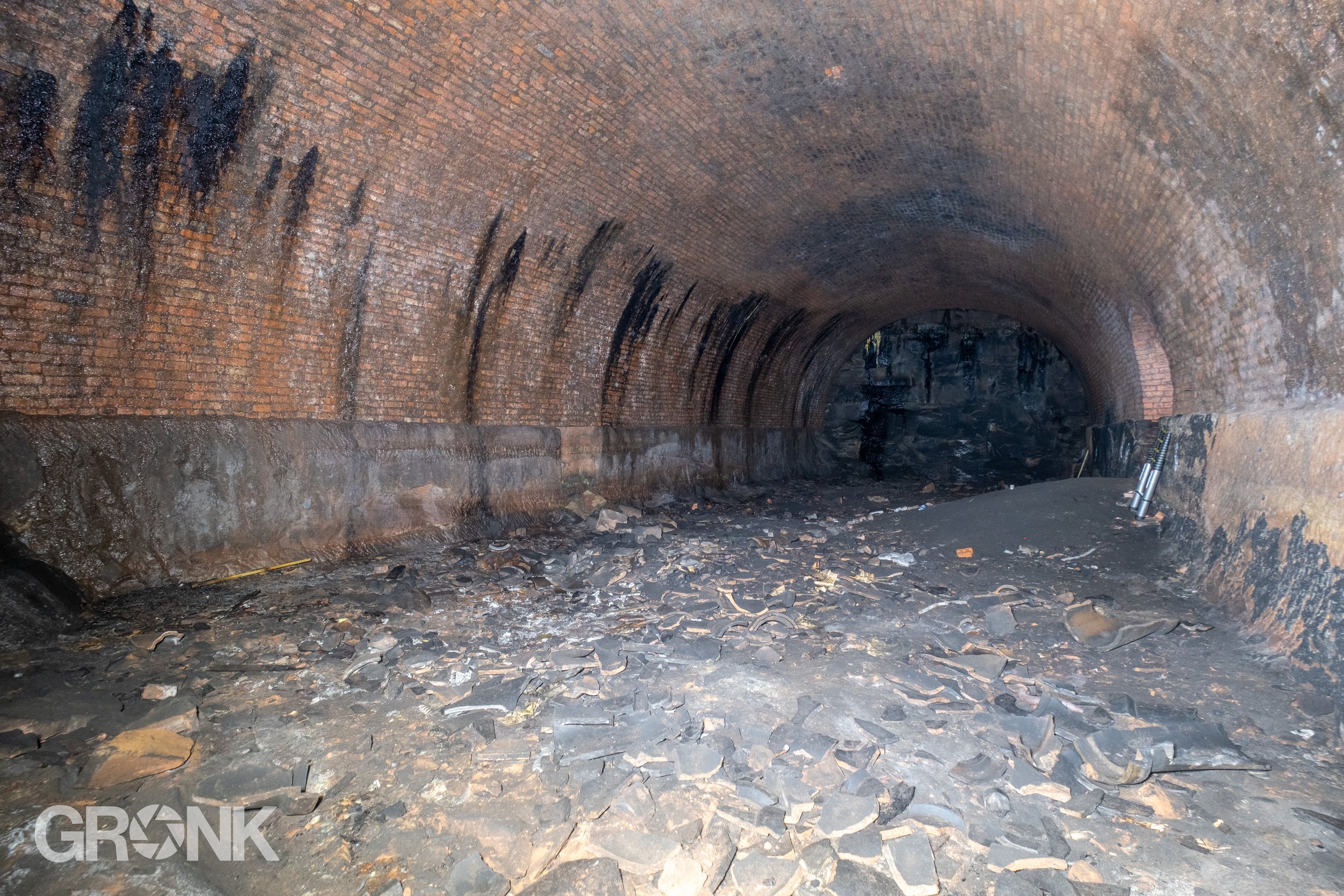
In Tunnel No.2, the original trackbed level is visible, flanked by 2.1-metre-high rock walls with refuges and timber cable hangers. One wooden sleeper remains intact. A section of the arch contains ten brick rings—likely a local reinforcement. Water damage has caused notable brick spalling. Tunnel No.3 curves throughout, with a partly-dug parallel bore alongside it. Inside the secondary bore, a sandstone ridge—about 1.8 metres high—runs down the centre, with the sides and upper sections excavated for lining. The southern portal features twin entrances beneath a substantial stone headwall and parapet. The cuttings between tunnels are overgrown and often used for fly-tipping. In 2011, rubbish blocked the southern end of Tunnel No.2, though it has since been cleared and preventive measures installed.