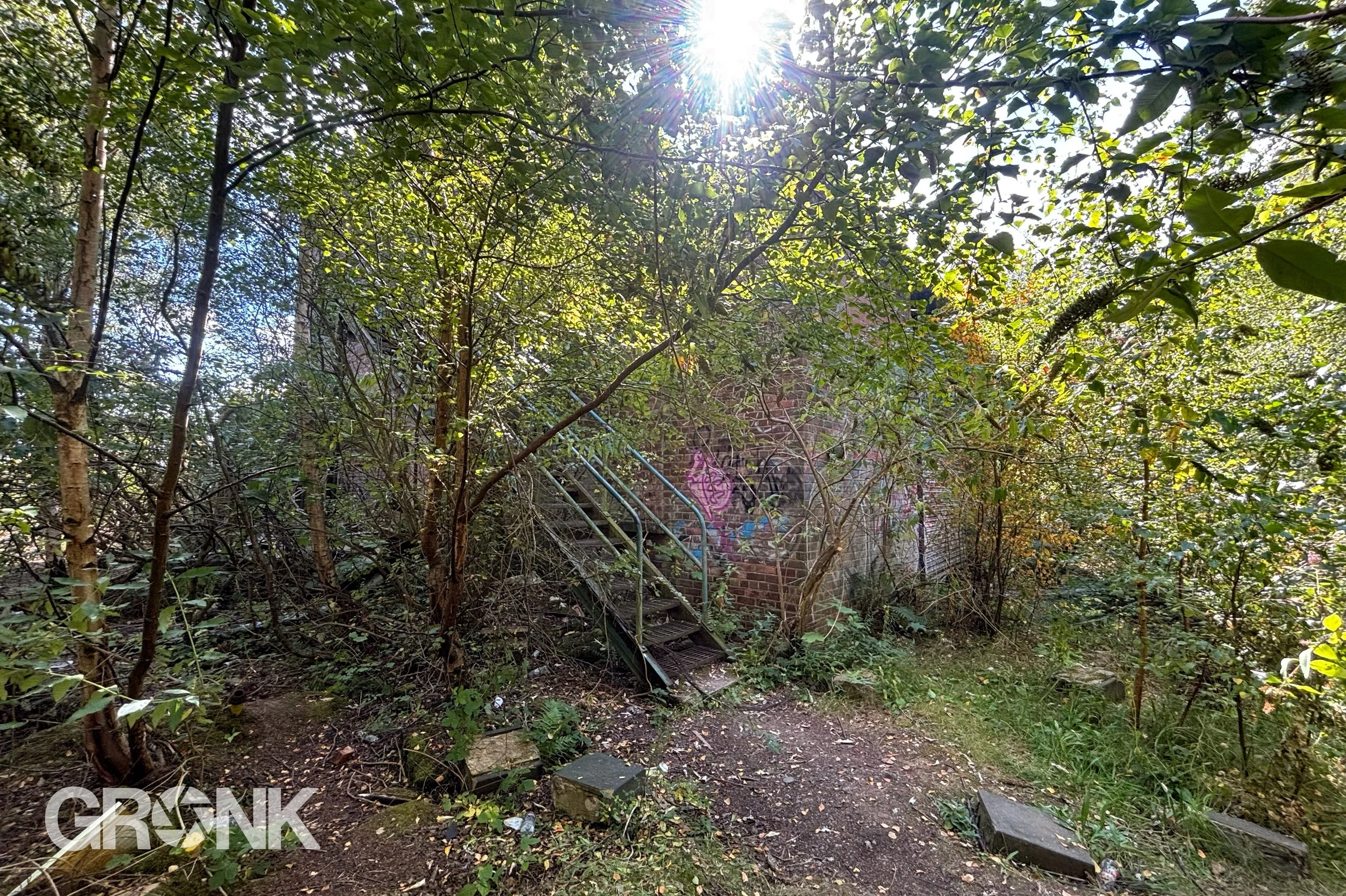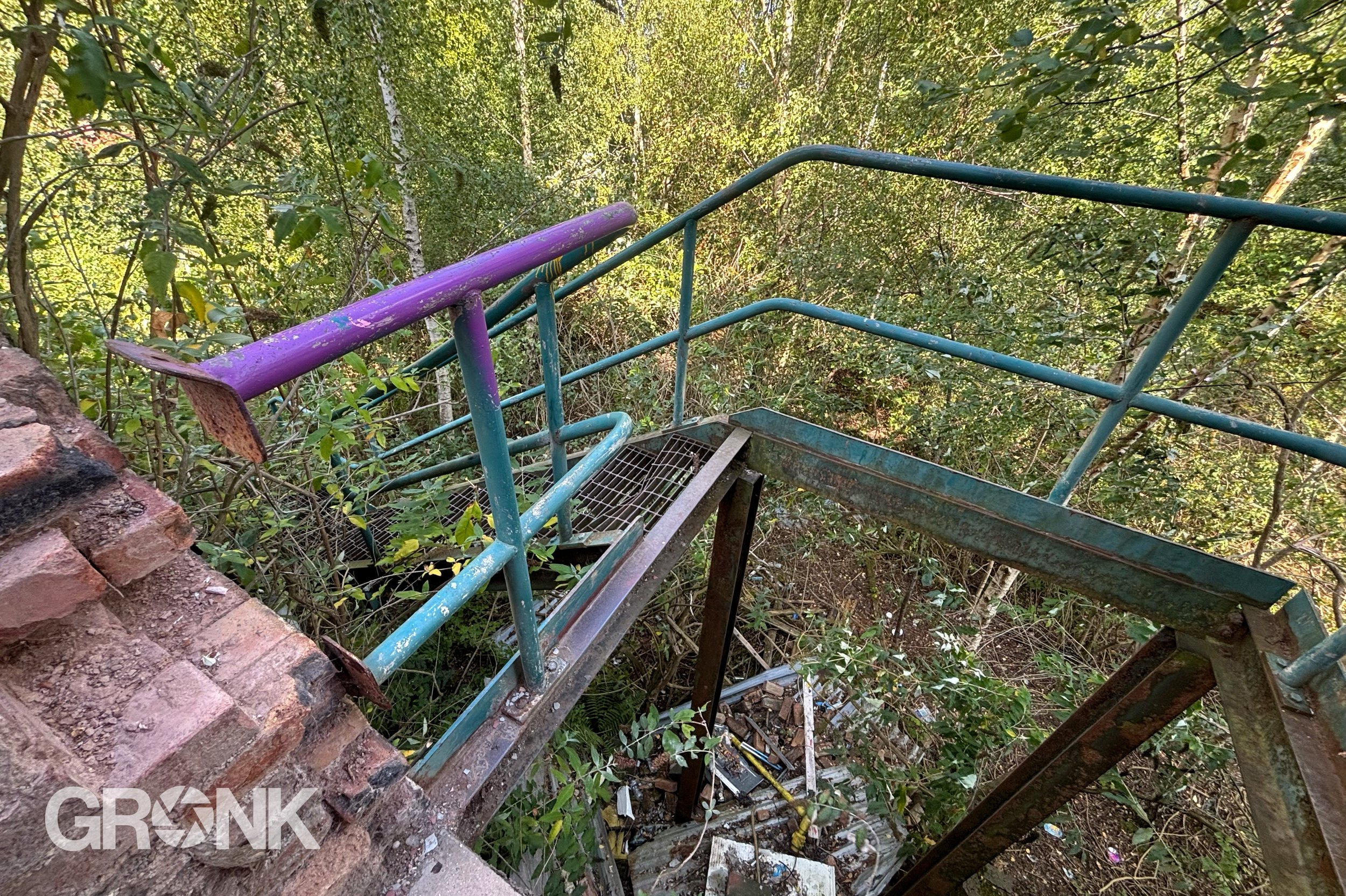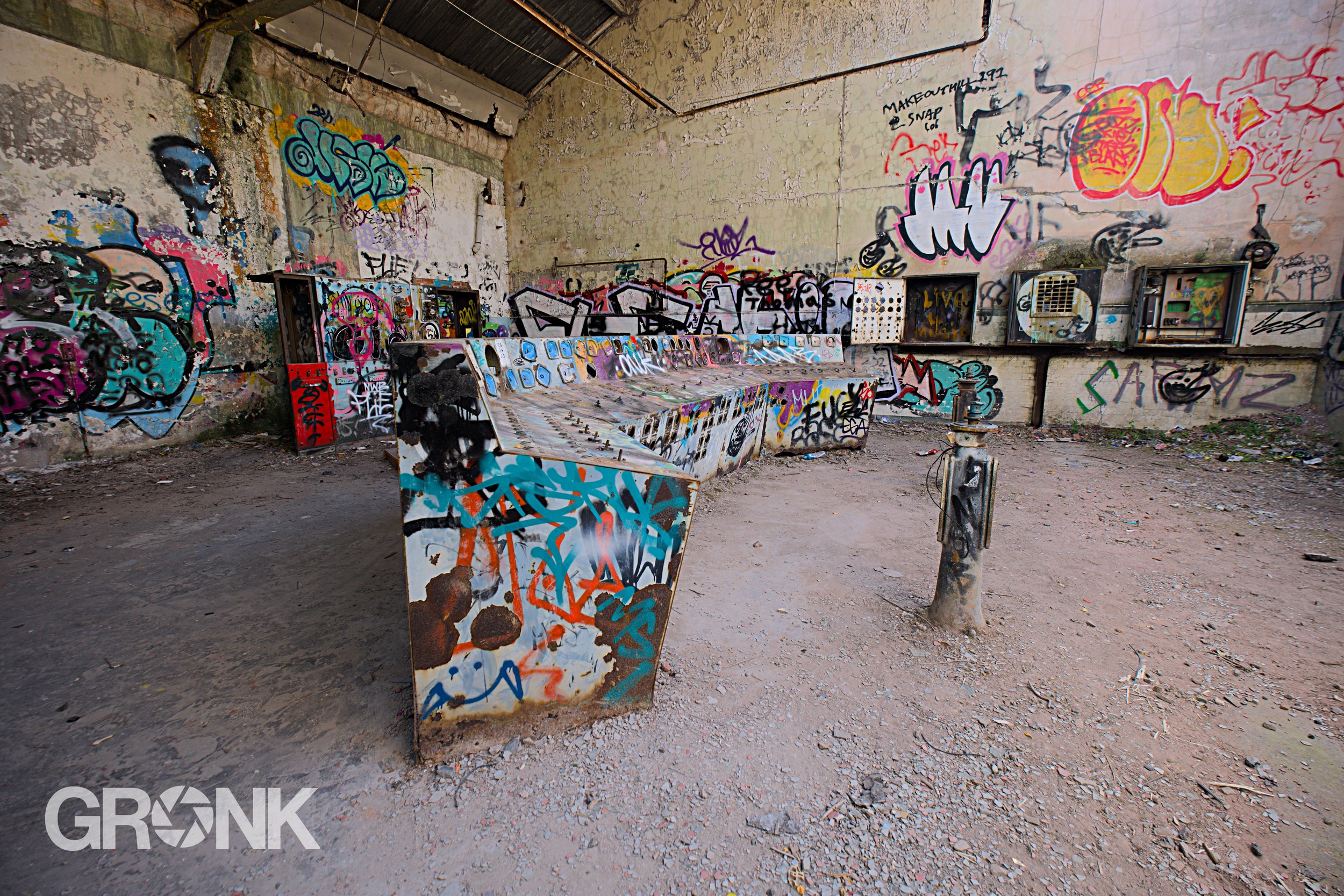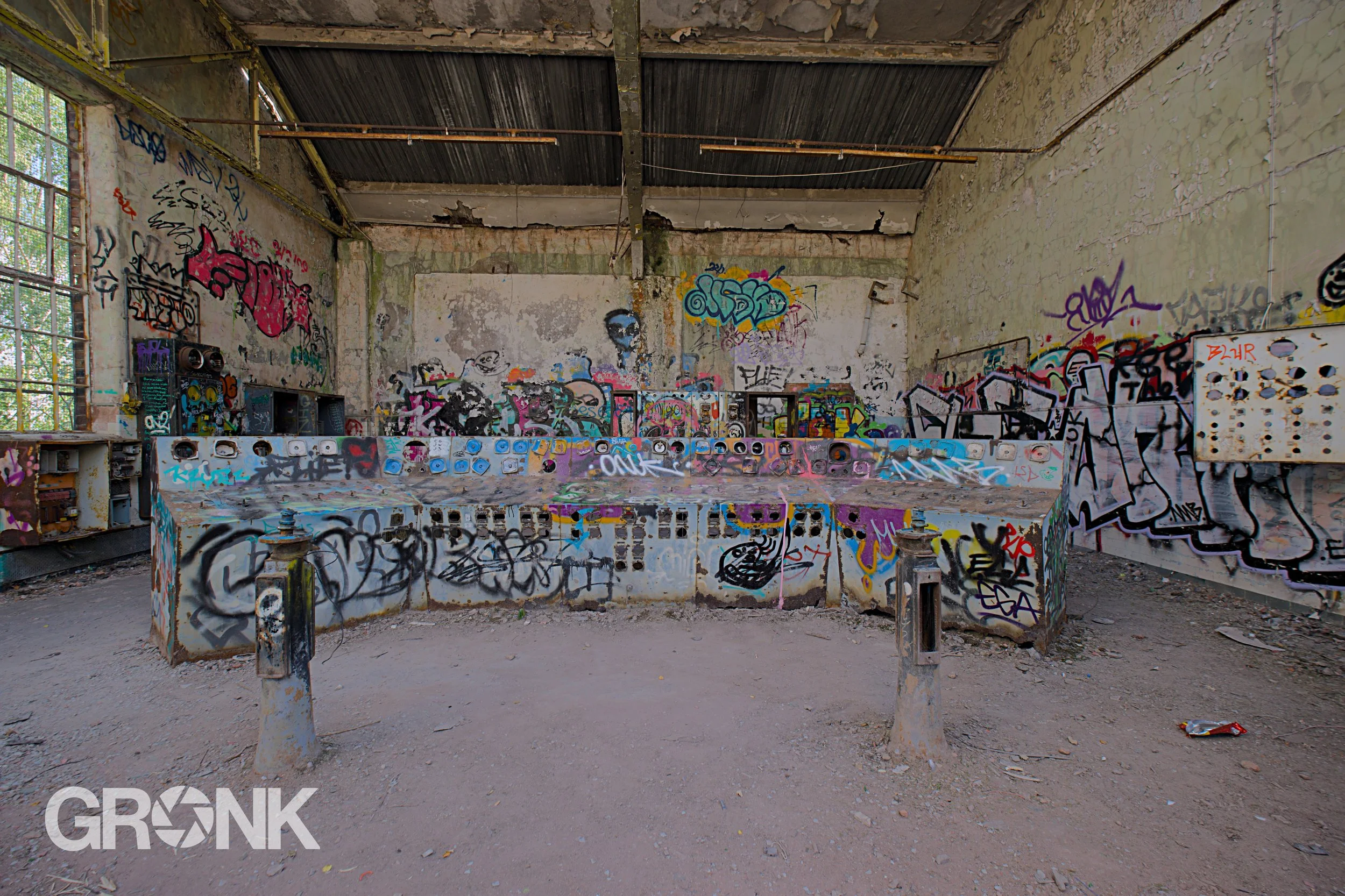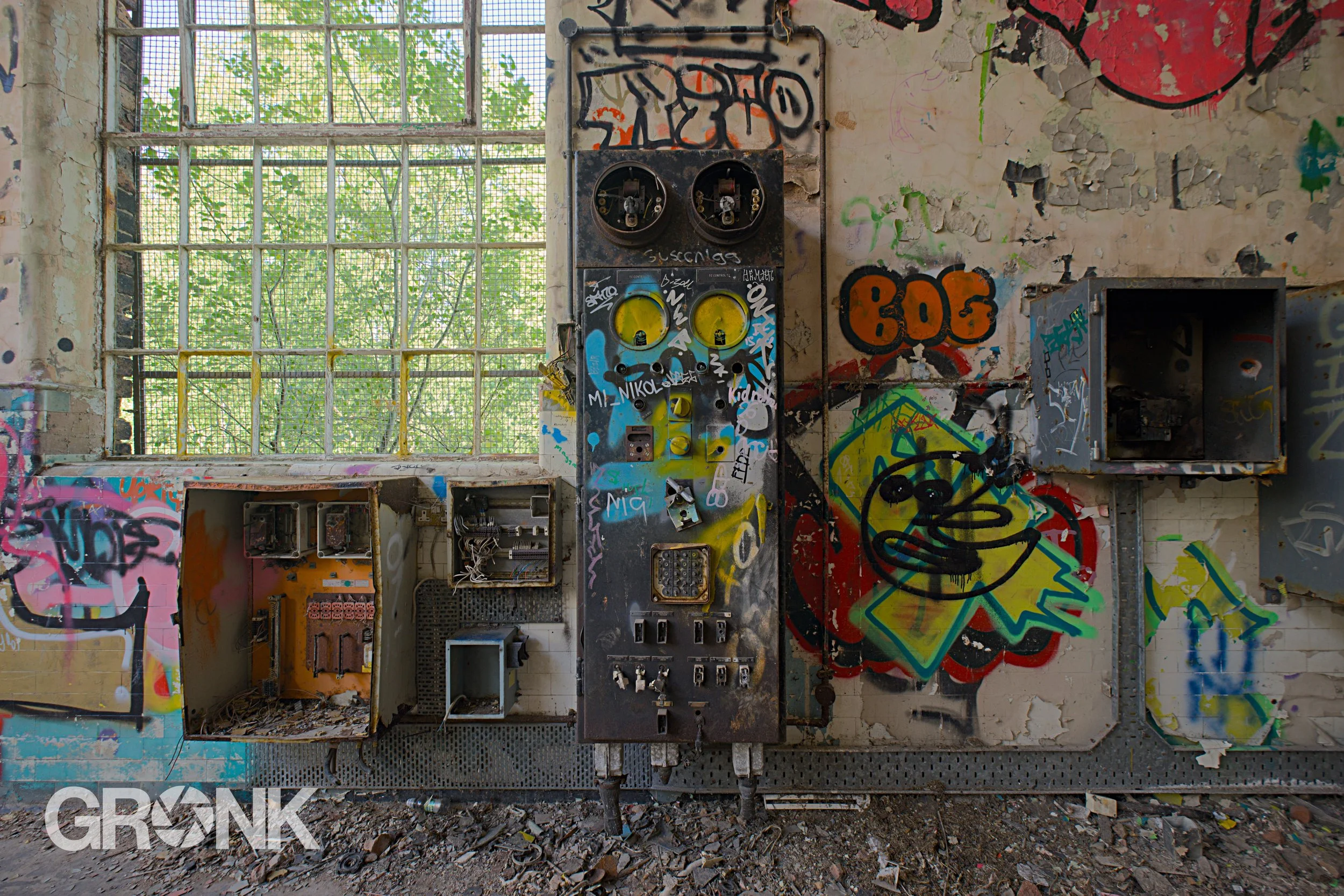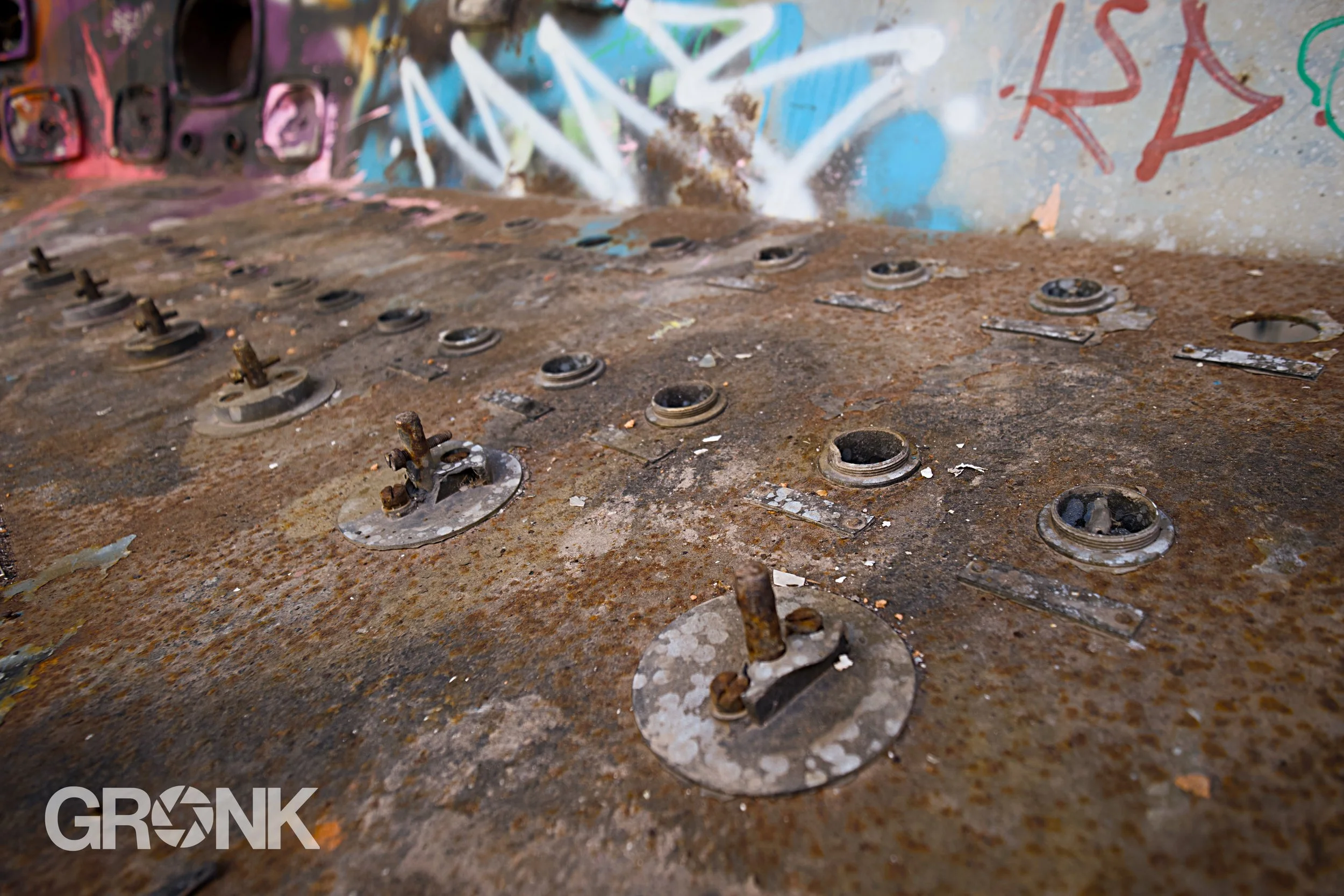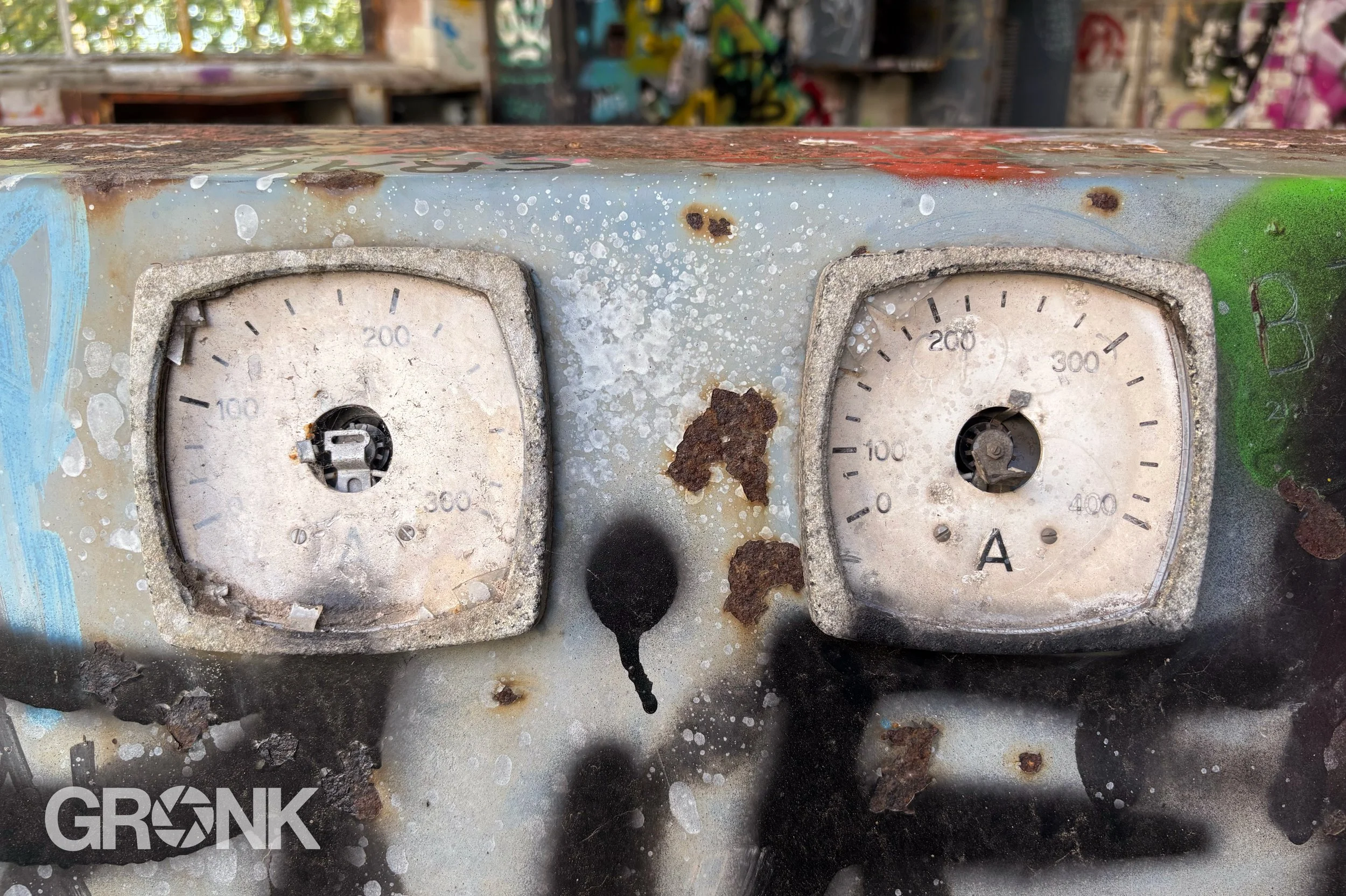
Power Station Control Room, Bromborough
Bromborough Power Station, located on the banks of the River Mersey in Wirral, was a significant mid-20th-century coal-fired power plant in the UK. Originally conceived as a modern facility to support expanding electricity needs, it played a key role in regional power generation during its operational life.
Construction began in 1948, undertaken by the British Electricity Authority, with Sir Alexander Gibb & Partners serving as consulting engineers. The station comprised eight large Babcock & Wilcox boilers and four English Electric turbo-alternators rated at 52.5 MW each, using hydrogen-cooled alternators producing electricity at 11 kV. The first generating unit was commissioned in November 1951, followed by subsequent ones through late 1952. Cooling water was drawn from, and returned to, the tidal River Mersey. Soon after commissioning, in line with government policy favoring oil's cost advantages, the boilers were converted from coal to oil firing.
Governance of the power station transitioned through several bodies as the UK electricity industry reorganised—first under the Central Electricity Authority (1955–57), then the Central Electricity Generating Board (from 1958). The station maintained relatively high thermal efficiencies—hovering around 29% in the 1950s and early 60s—but utilization declined sharply after the 1973–74 oil crisis drove up fuel costs. Ultimately, Bromborough Power Station ceased operation in 1980 and was fully demolished by 1986.
It’s worth noting that Bromborough also had an earlier ‘Central Power Station’, built in 1918 by Lever Brothers to supply power to their Port Sunlight operations. This facility initially comprised three coal-fired boilers feeding a 5 MW Siemens-Brothers generator, later expanded with additional boilers and a 6.25 MW set, yielding about 11.5 MW capacity. By the 1950s, this older station connected to the emerging National Grid, and even incorporated a back-pressure 1.3 MW British Thomson-Houston generator to reuse steam in local industrial processes. This earlier site continued serving until its partial decommission in the 1970s and final closure by 1998, with only control room structures surviving into recent times