ChNNP Cooling Towers
The two cooling towers at the Chernobyl Nuclear Power Plant were part of an ambitious plan to expand the station with Reactors 5 and 6, begun in the early 1980s. Unlike Reactors 1–4, which relied on a large cooling pond, the new units required additional heat-dissipation capacity. Designers therefore planned two natural-draft cooling towers, each roughly 150 meters tall, constructed in place from reinforced concrete.
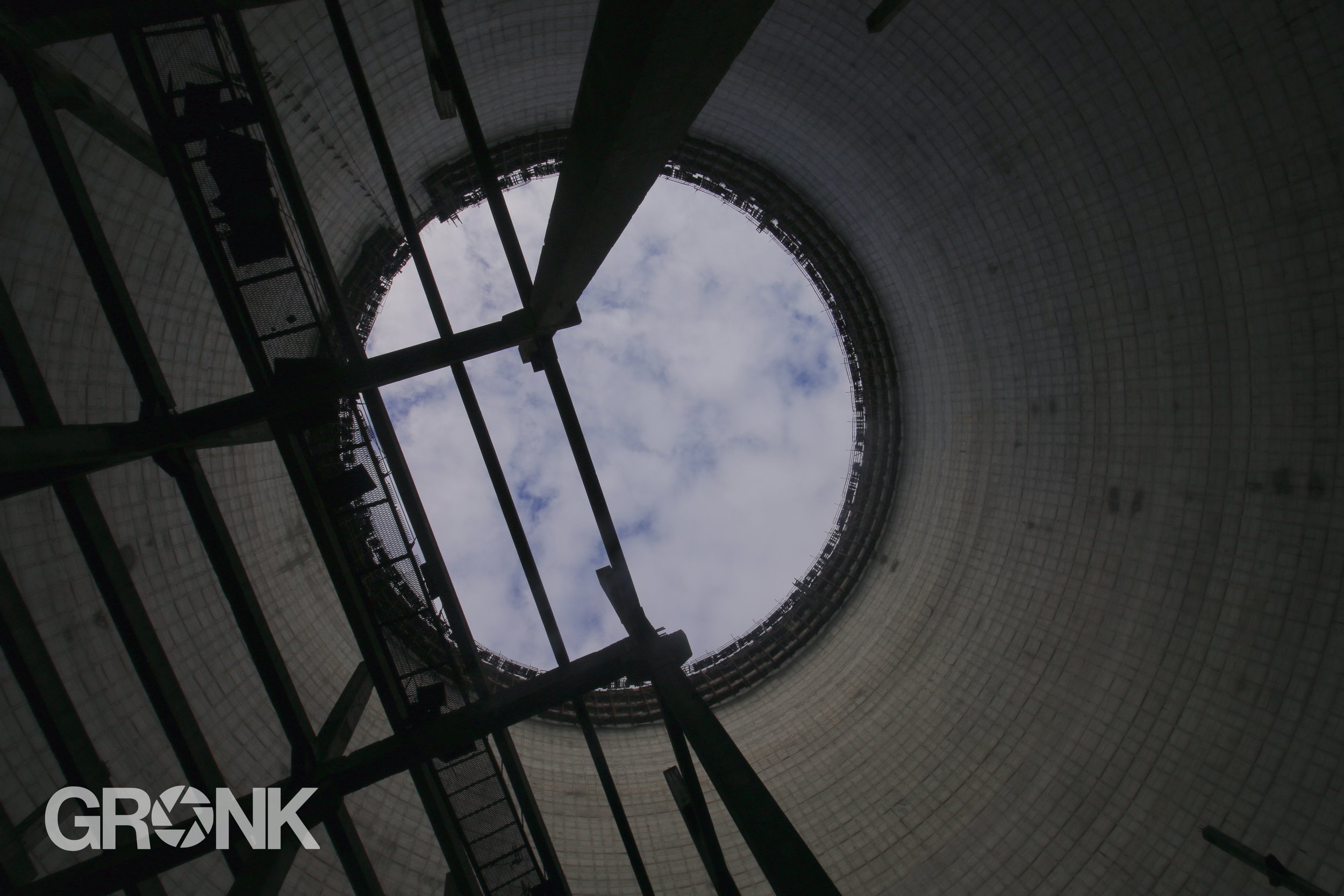
Construction of Reactor 5 began in 1981, and Reactor 6 followed in 1983. Work on the associated cooling towers progressed steadily, with scaffolding, formwork, and concrete sections rising into their familiar hyperboloid shape. By April 1986—when Reactor 4 exploded—both towers were incomplete shells. Construction was briefly restarted later that year but was halted permanently by 1987, and the reactors themselves were formally cancelled in 1989.
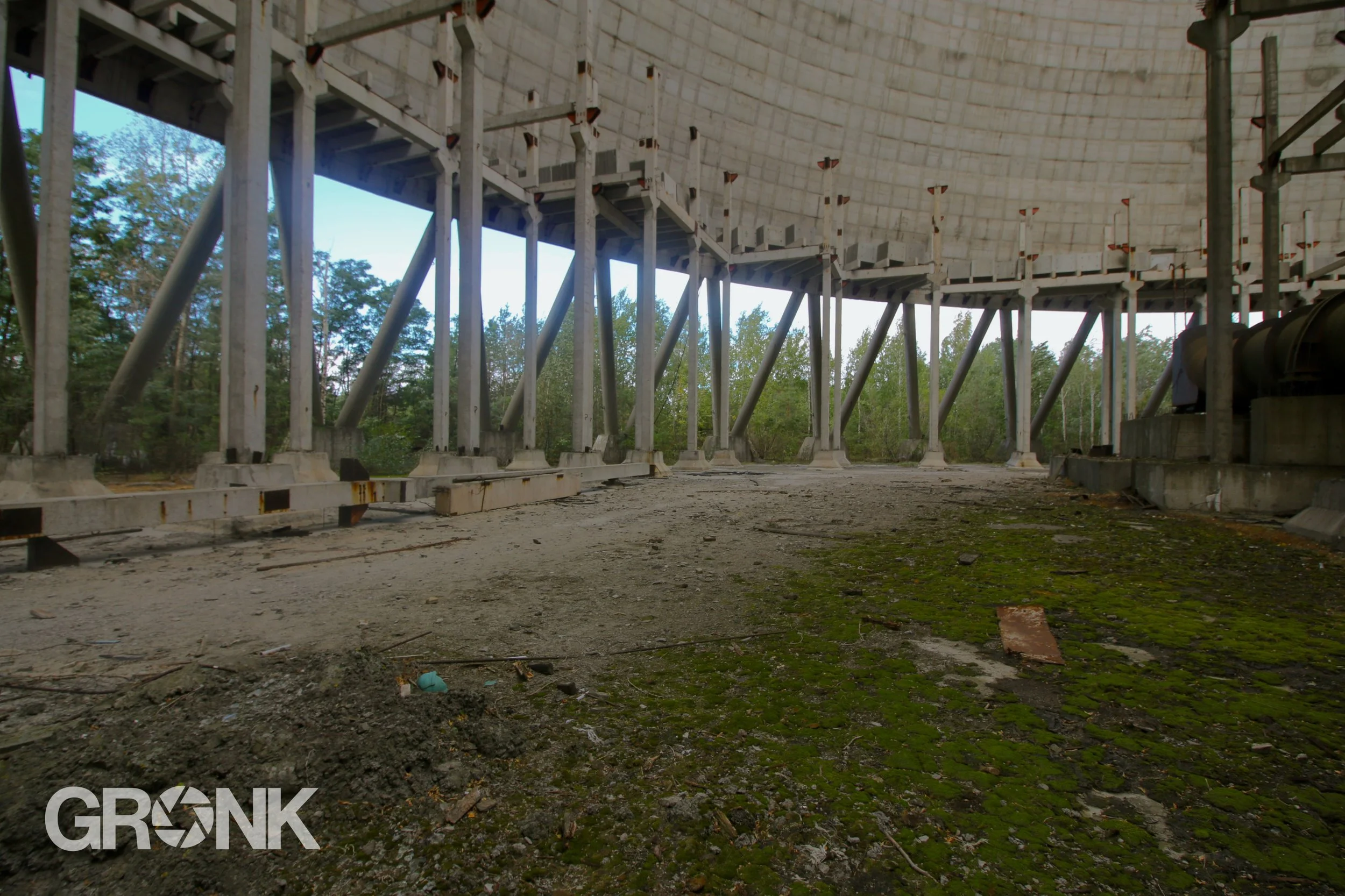
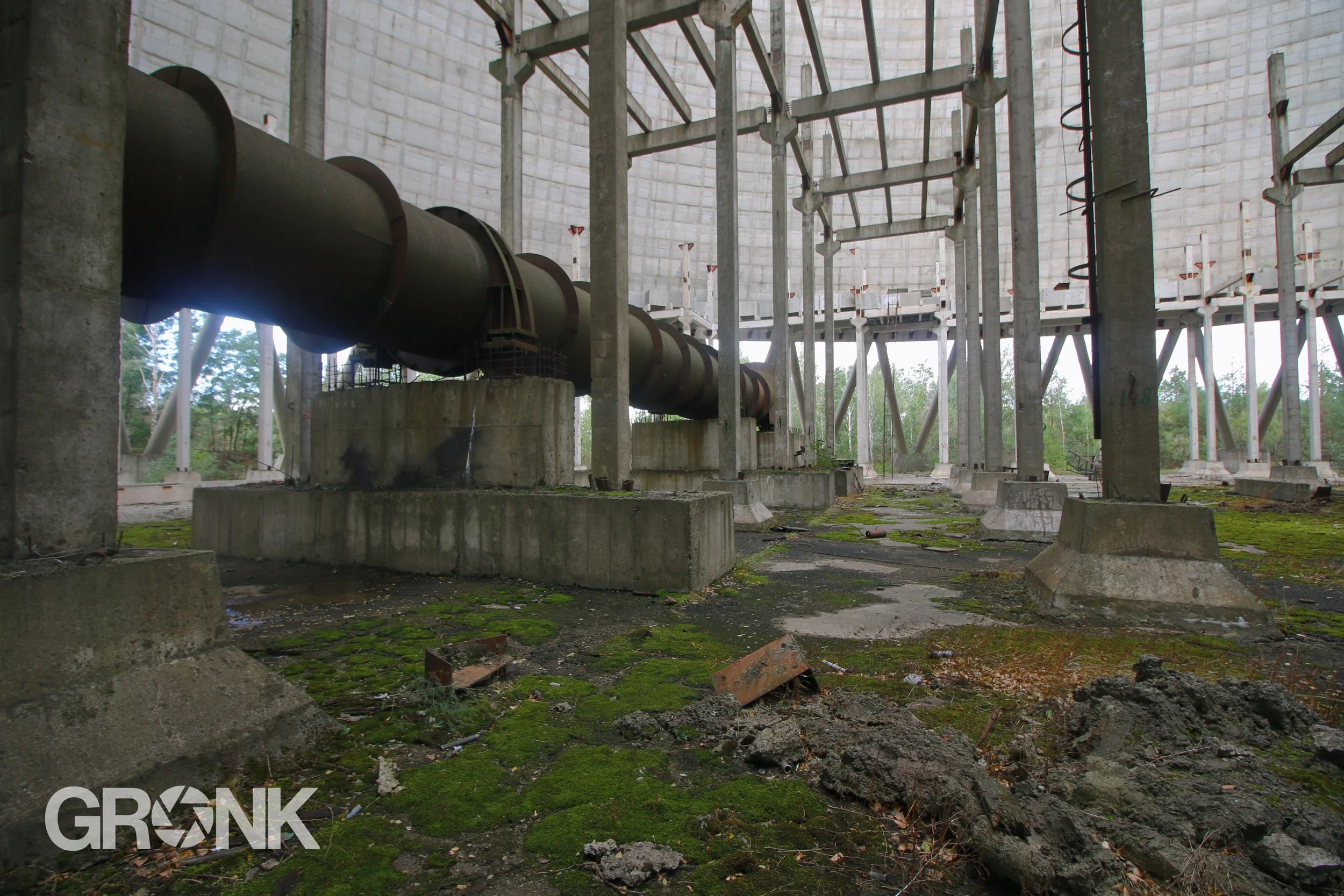
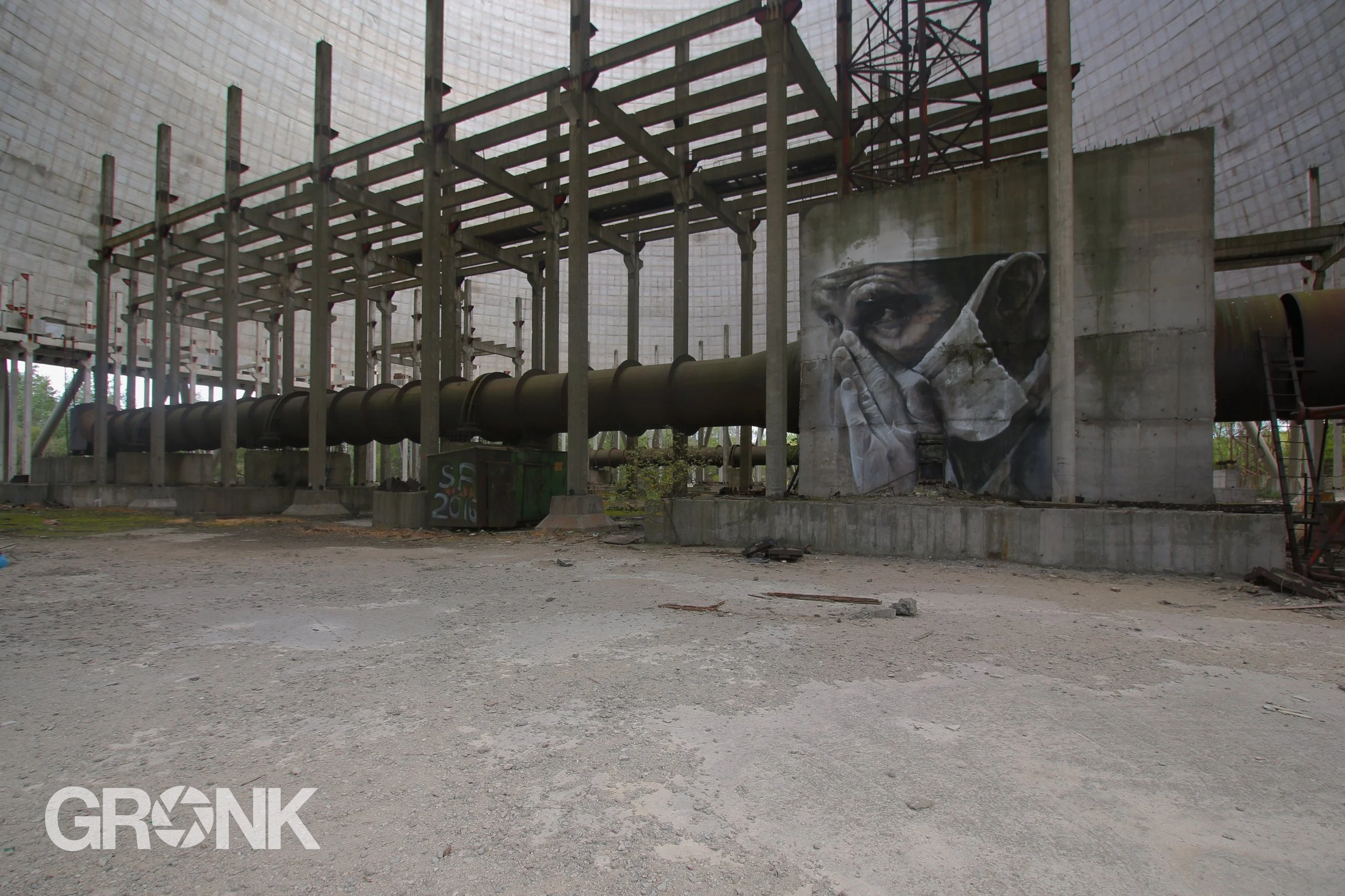
Today, the towers stand as stark, unfinished relics within the Chernobyl Exclusion Zone. With no mechanical equipment ever installed, they remain hollow concrete structures, still showing abandoned work platforms and reinforcement. Nature has begun reclaiming them, and radiation levels vary but are generally manageable for short visits. One tower even features a large commemorative mural created decades after the disaster.