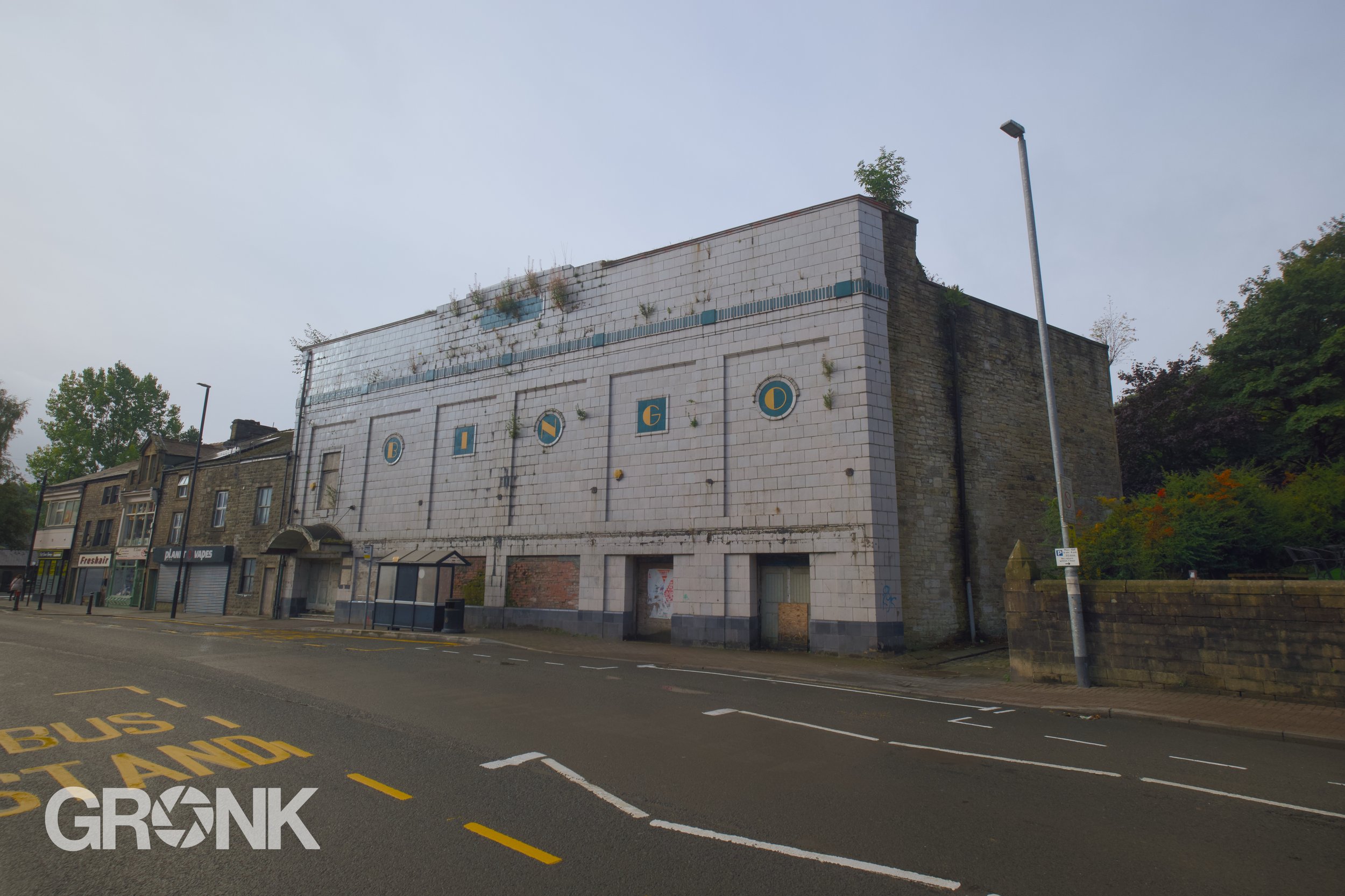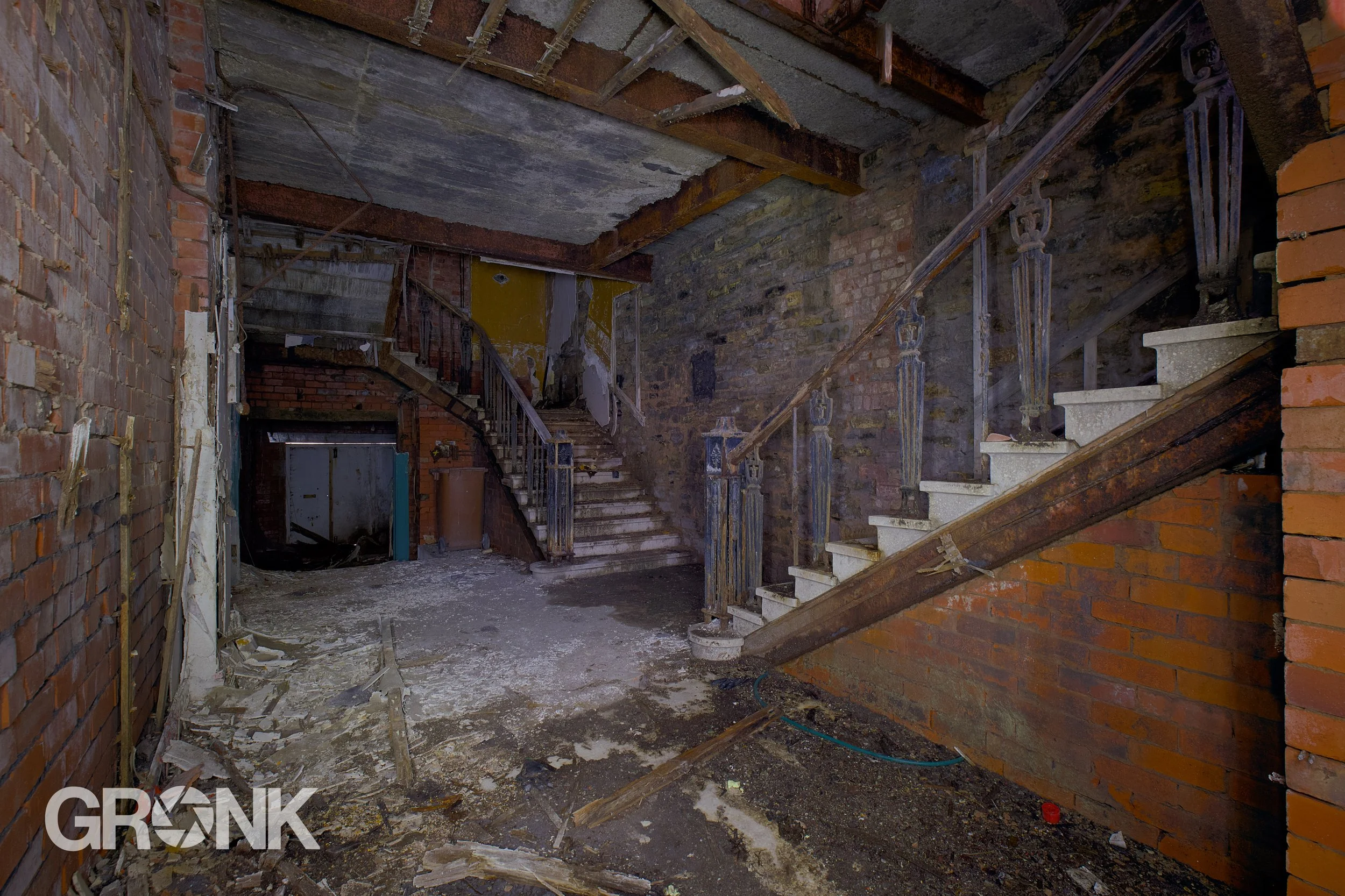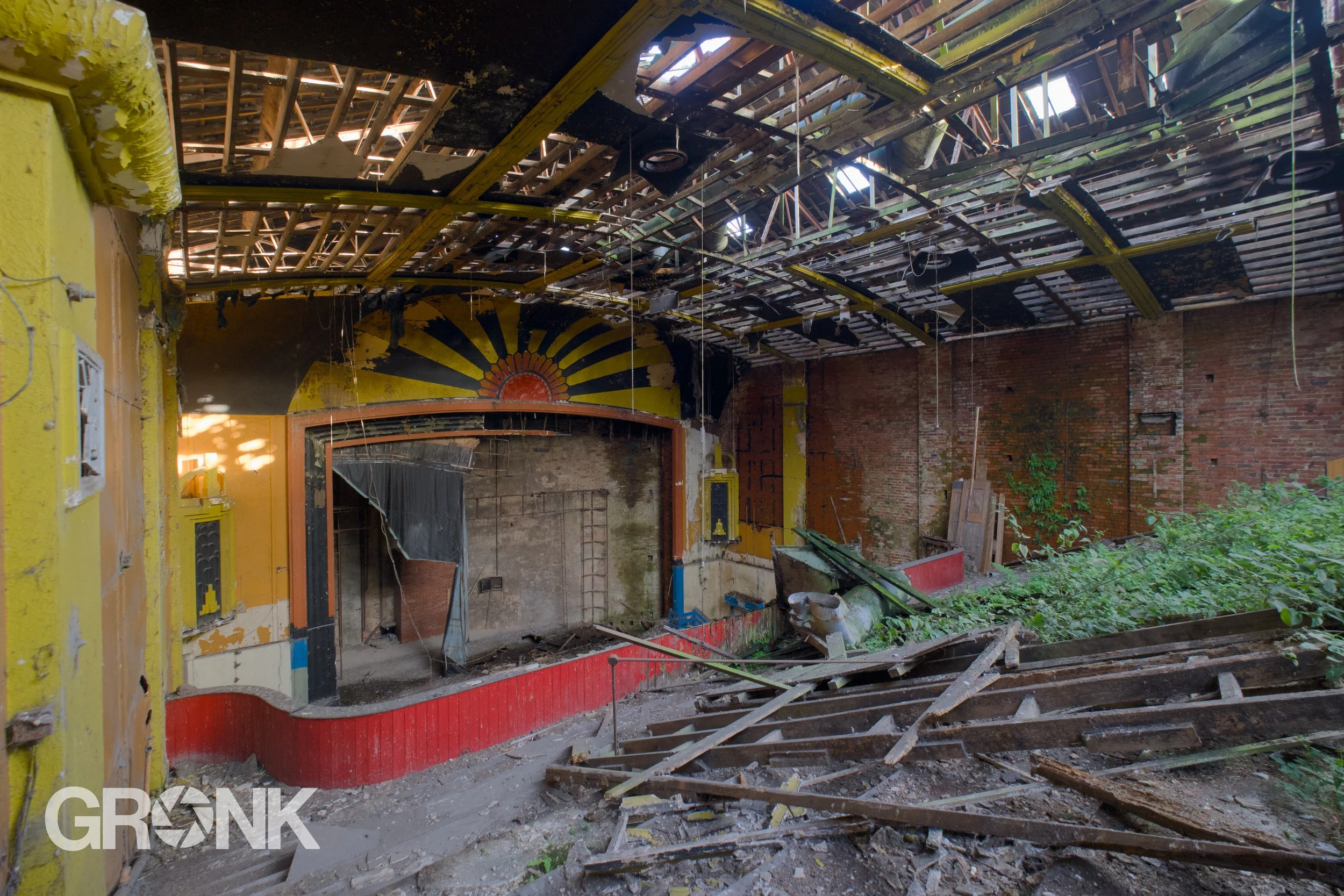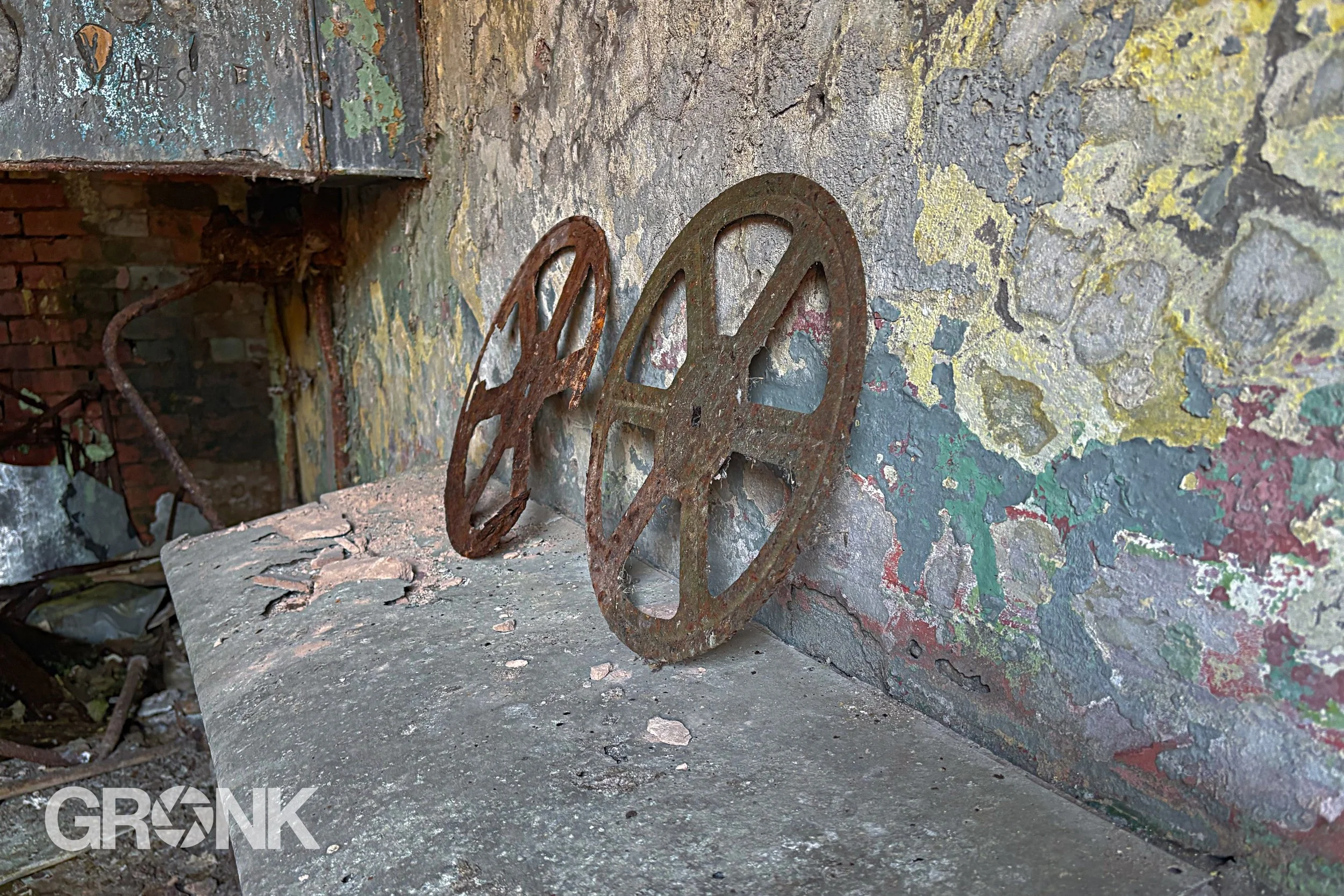
The Regal Cinema in Bacup opened on 7th September 1931 as the “New Regal Super Cinema”, replacing earlier venues on the site, including the Gem Picture Palace and the Kozy Picture House. Designed by local architect Harry Cropper, the cinema showcased an Art Deco style, with a white faience-tiled frontage, a stained-glass window in the foyer, and decorative scenic panels along the auditorium walls. It seated around 960 people and boasted a wide 45-foot proscenium, which was unusually large for a venue of its size.
The Regal became a central part of Bacup’s cultural life, showing films through the golden age of cinema. In 1959, it was taken over by the Leeds-based Star Cinemas chain. By the late 1960s, facing the decline in cinema attendance typical of the era, it was converted into a bingo hall—first known as the New Embassy Bingo Club, later the Roxy Bingo Club.
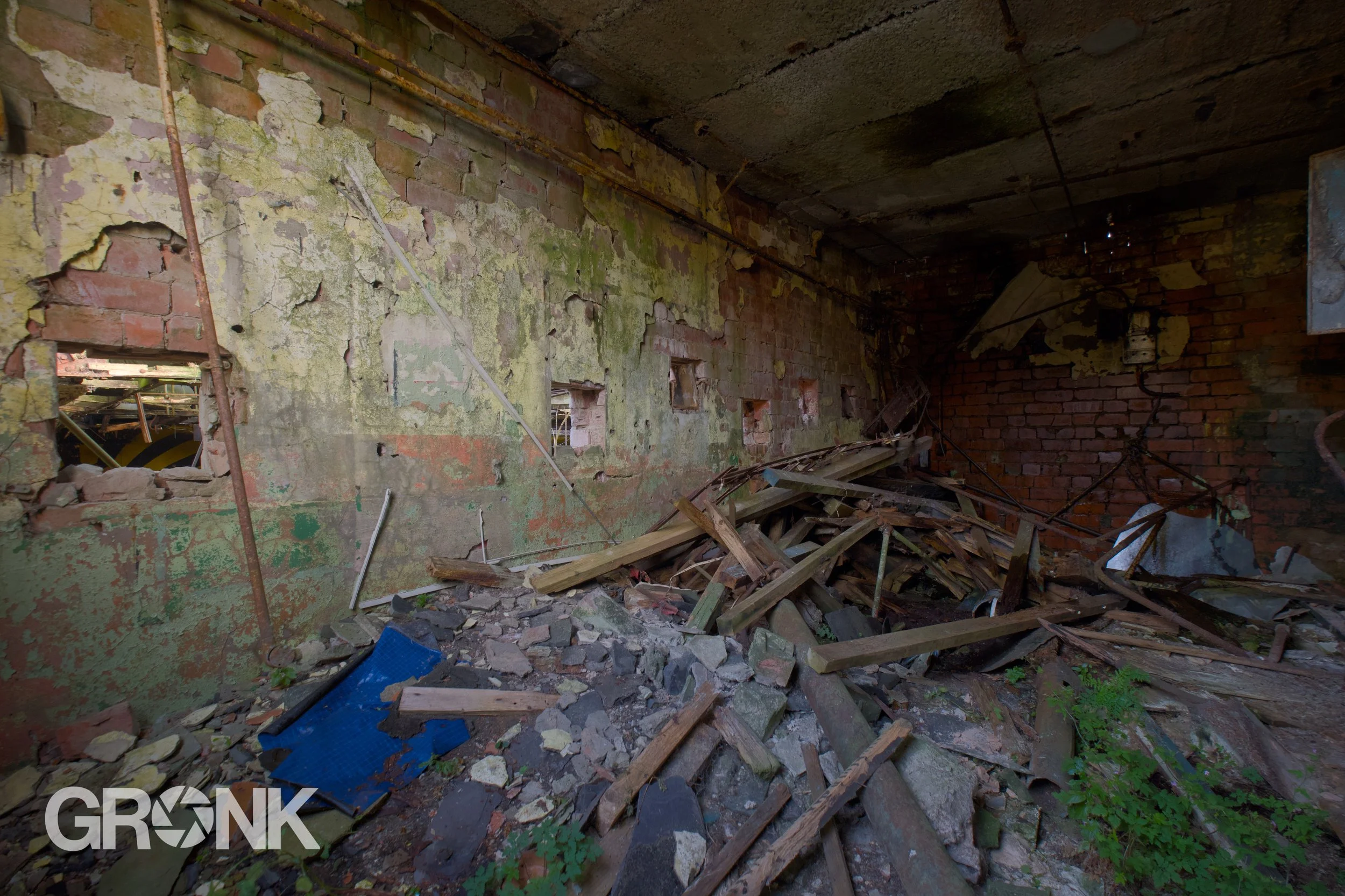
The bingo venue eventually closed in the early 2000s, after which the building sat derelict. Although not listed, it was considered architecturally significant as one of only two Art Deco-style buildings in Bacup and was located in a key gateway site within the Bacup Town Centre Conservation Area.
Despite its heritage value, structural surveys revealed the building was in poor condition. Regeneration efforts through the High Street Heritage Action Zone (HSHAZ) initially aimed to restore the site, but by 2023, the conservation deficit was deemed too great. Demolition was approved to make way for a new development.
The proposed replacement—part of the “Bacup 2040 Vision”—is the Bacup Technology Hub: a two-storey commercial building with five modern office and industrial units. While the loss of the Regal Cinema marks the end of an era, local authorities see the redevelopment as essential to Bacup’s economic future.
The Regal’s story reflects broader changes in British towns: the rise and fall of local cinemas, shifting leisure habits, and the challenge of balancing heritage with regeneration.