The hospital now known as Abergele Hospital in North Wales was originally established in 1910 when the Manchester City Council acquired the Plas Ucha estate to serve as a sanatorium for children from the city suffering from tuberculosis. Nestled on a sunny hillside with pine trees near Abergele, it offered fresh air and a rural setting believed to aid recovery.
In 1925 a new access bridge was built to the site and in 1931 a children’s section was opened, showing the growth of the facility beyond its initial remit. When the NHS was created in 1948, the hospital joined the system and in 1955 it was renamed Abergele Chest Hospital, reflecting its continuing role in respiratory care. Over subsequent decades it evolved from a tuberculosis sanatorium to a broader community hospital, and in the 2010s further developed specialist services such as an ophthalmology unit.
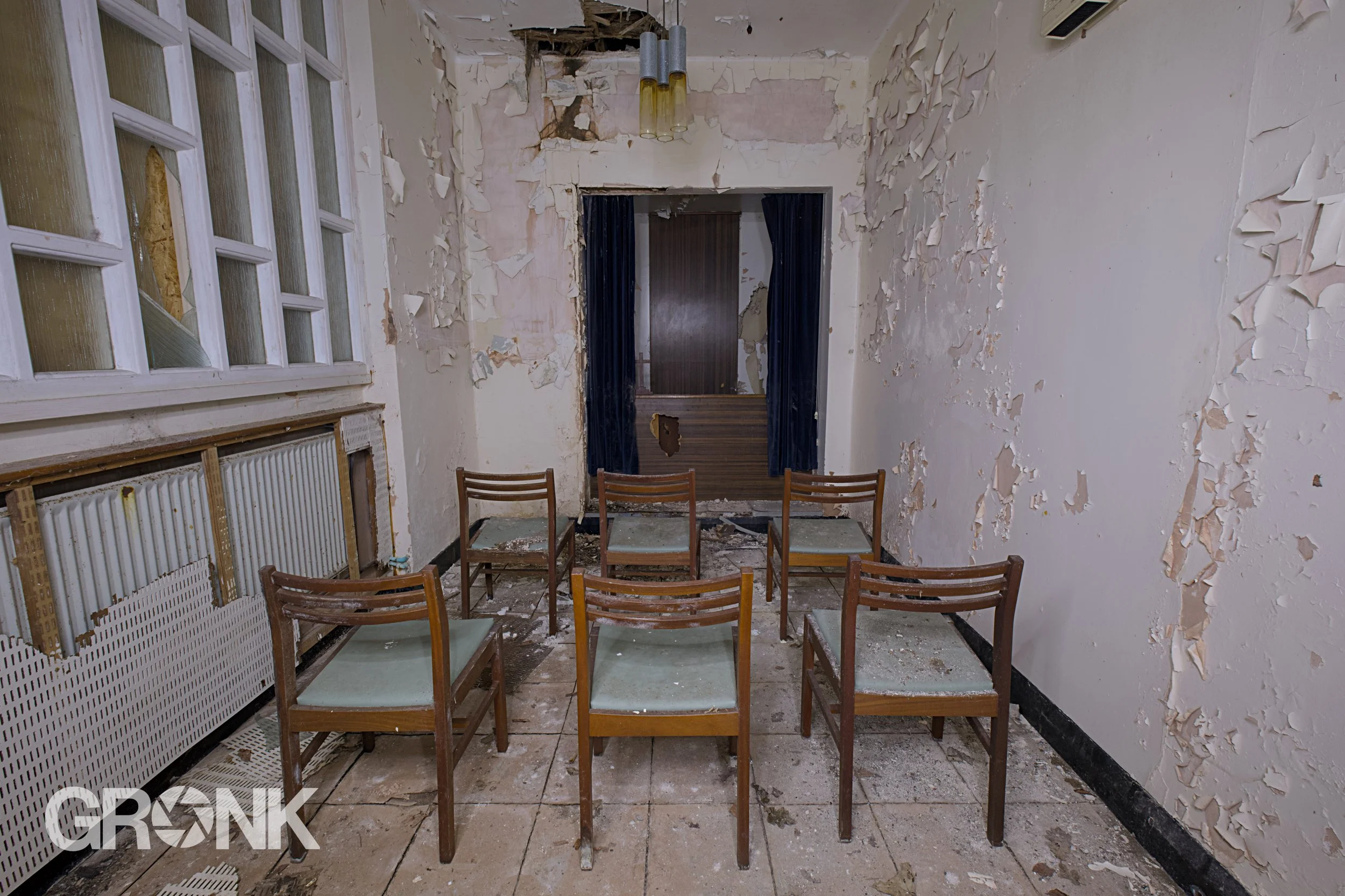
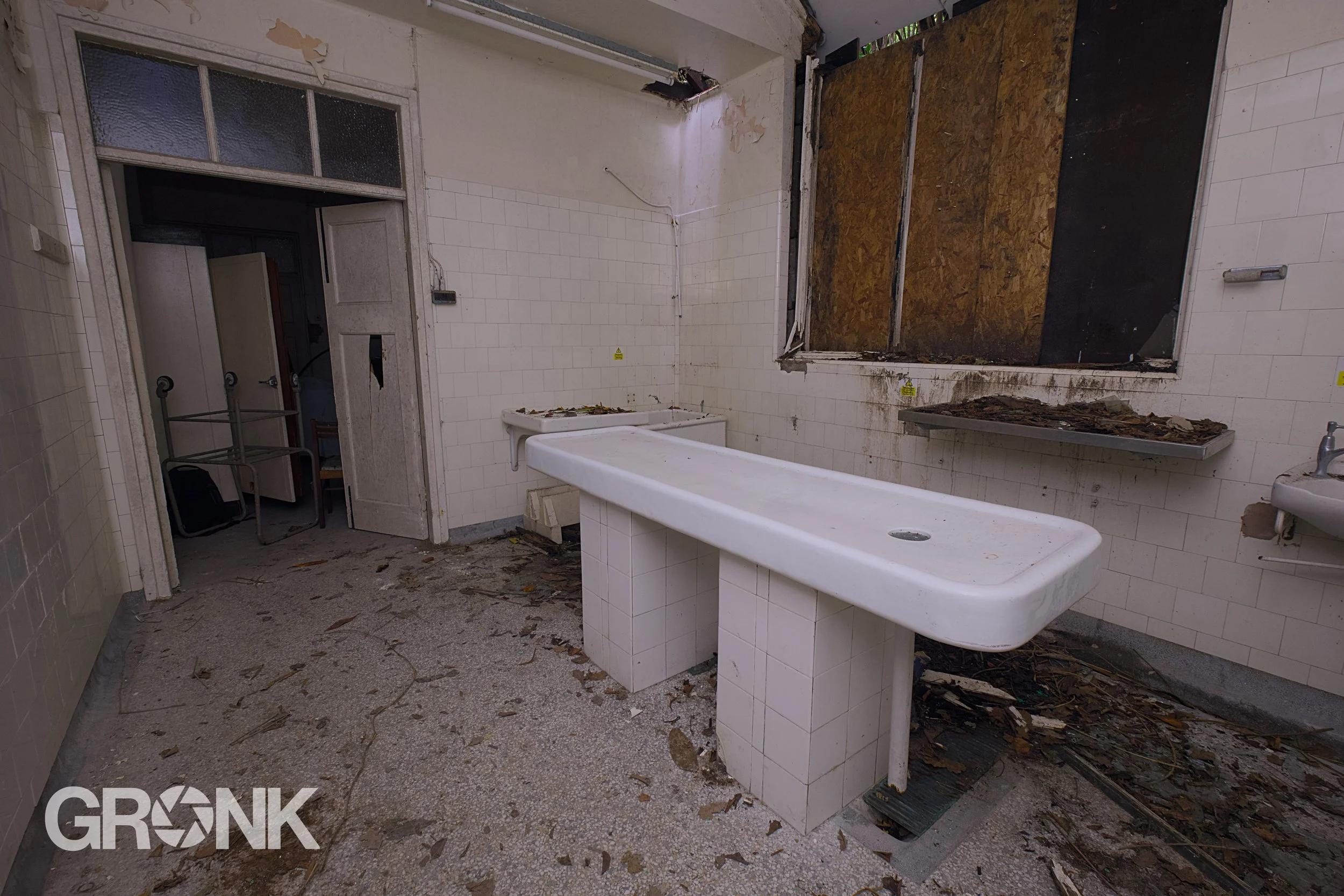
Within the wider site of Abergele Hospital there is a lesser-known structure: an old mortuary/morgue facility, now disused. Urban-exploration accounts mention that the mortuary lies on the hospital grounds and appears to have been closed some years ago.
Though official records are sparse, one such report states it “closed sometime around the late 90’s/early 2000’s” and still contained artefacts like a porcelain table, refrigeration trays and a mortuary register from 1986.
The existence of this mortuary reflects the older hospital’s evolution and scale — when care of infectious diseases, trauma and death were managed on site, the infrastructure included mortuary services. As the hospital’s role transformed and facilities modernised, the old mortuary became redundant. Today it stands as a quiet relic of earlier medical eras, evocative of mid-20th-century hospital practices. The building is generally not publicly referenced in official histories, so much of what is known comes from photography and urbex-forums rather than archival documents.