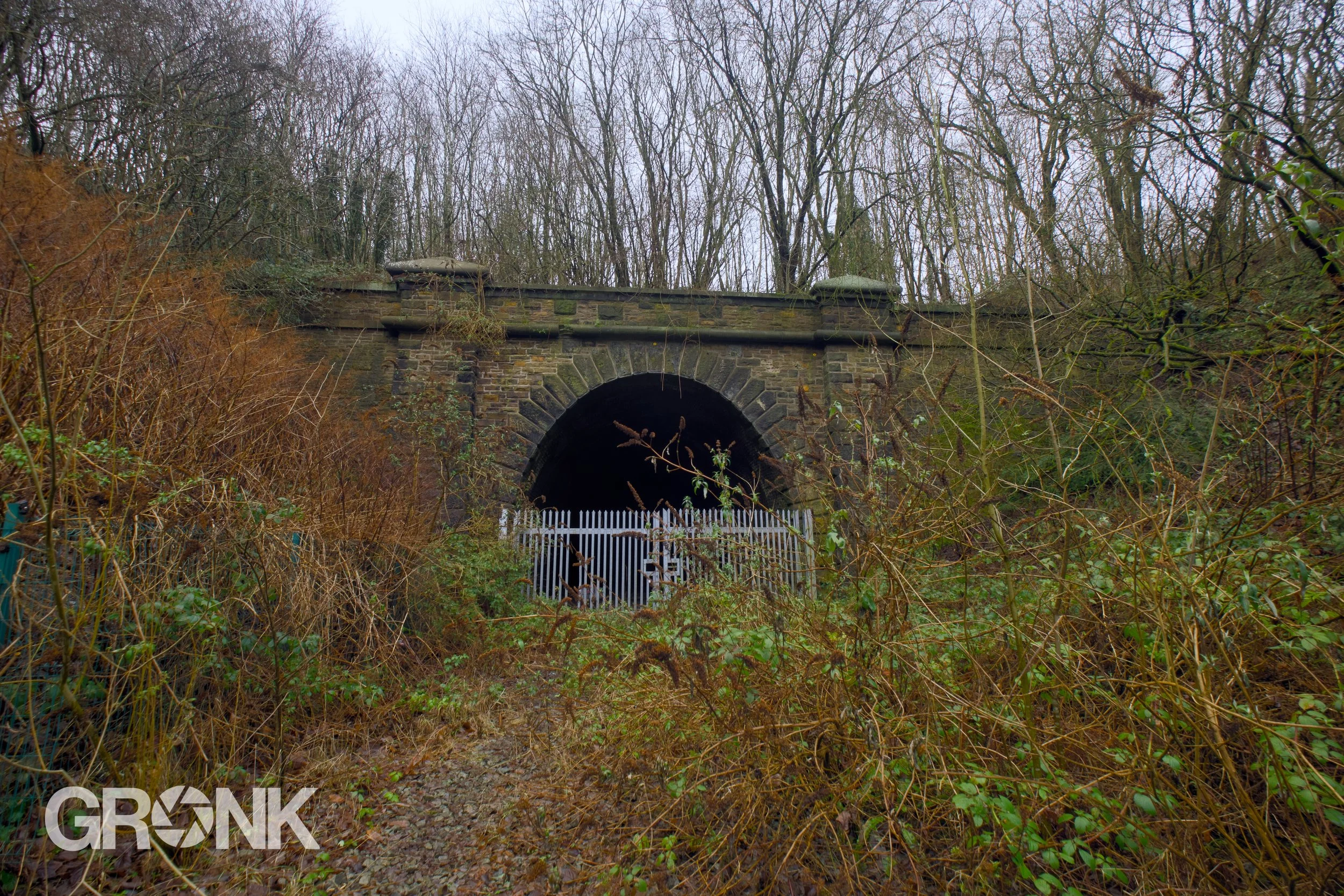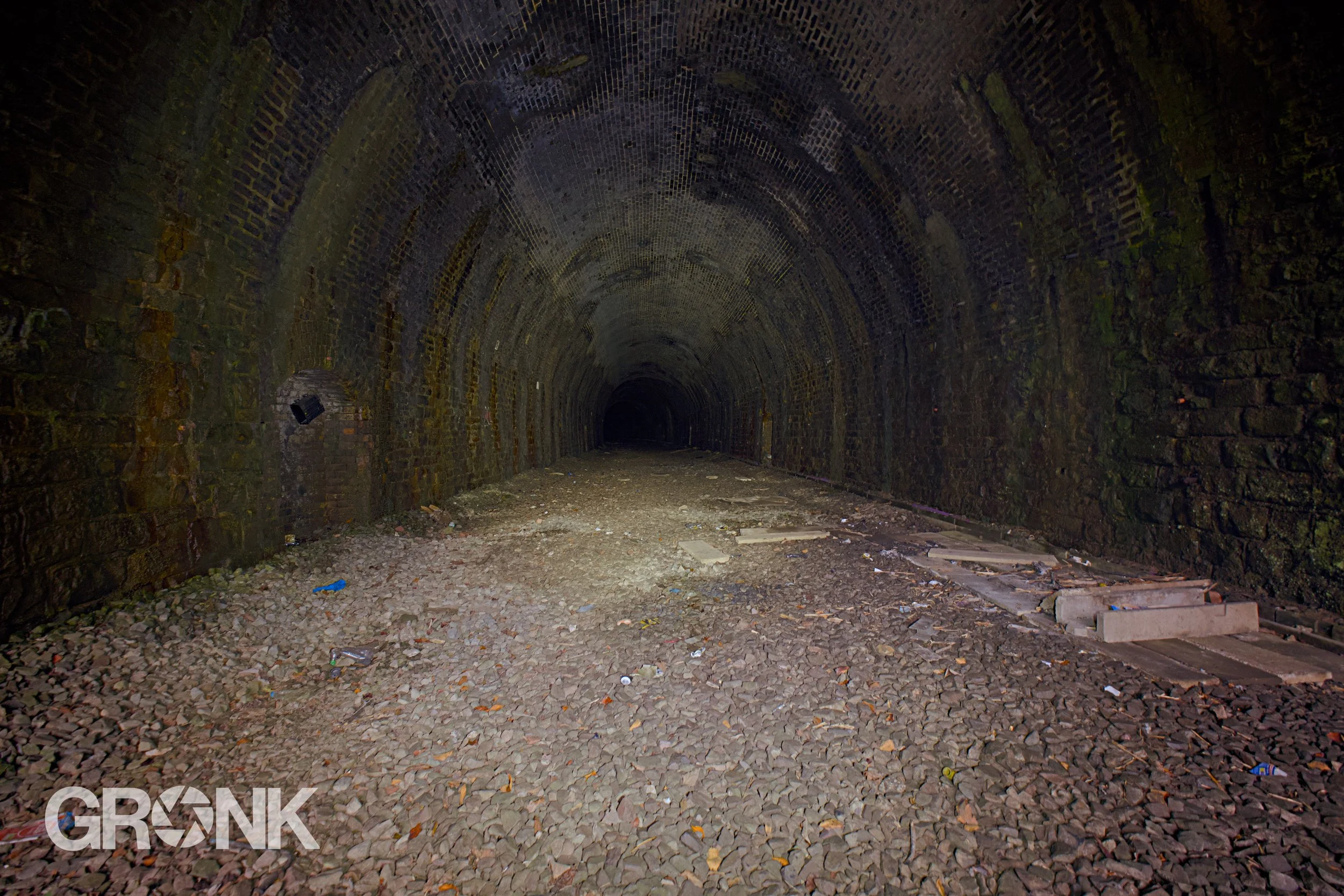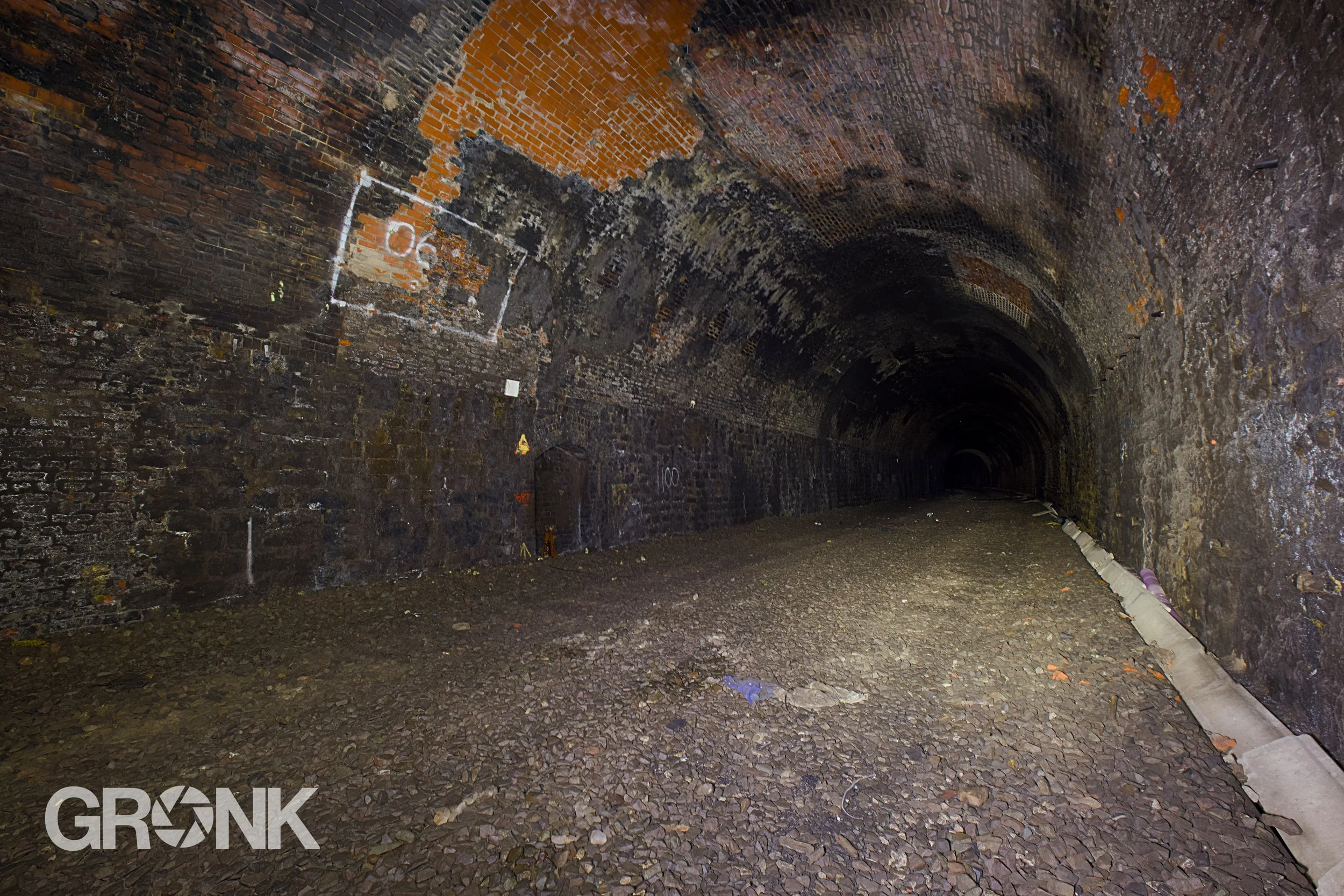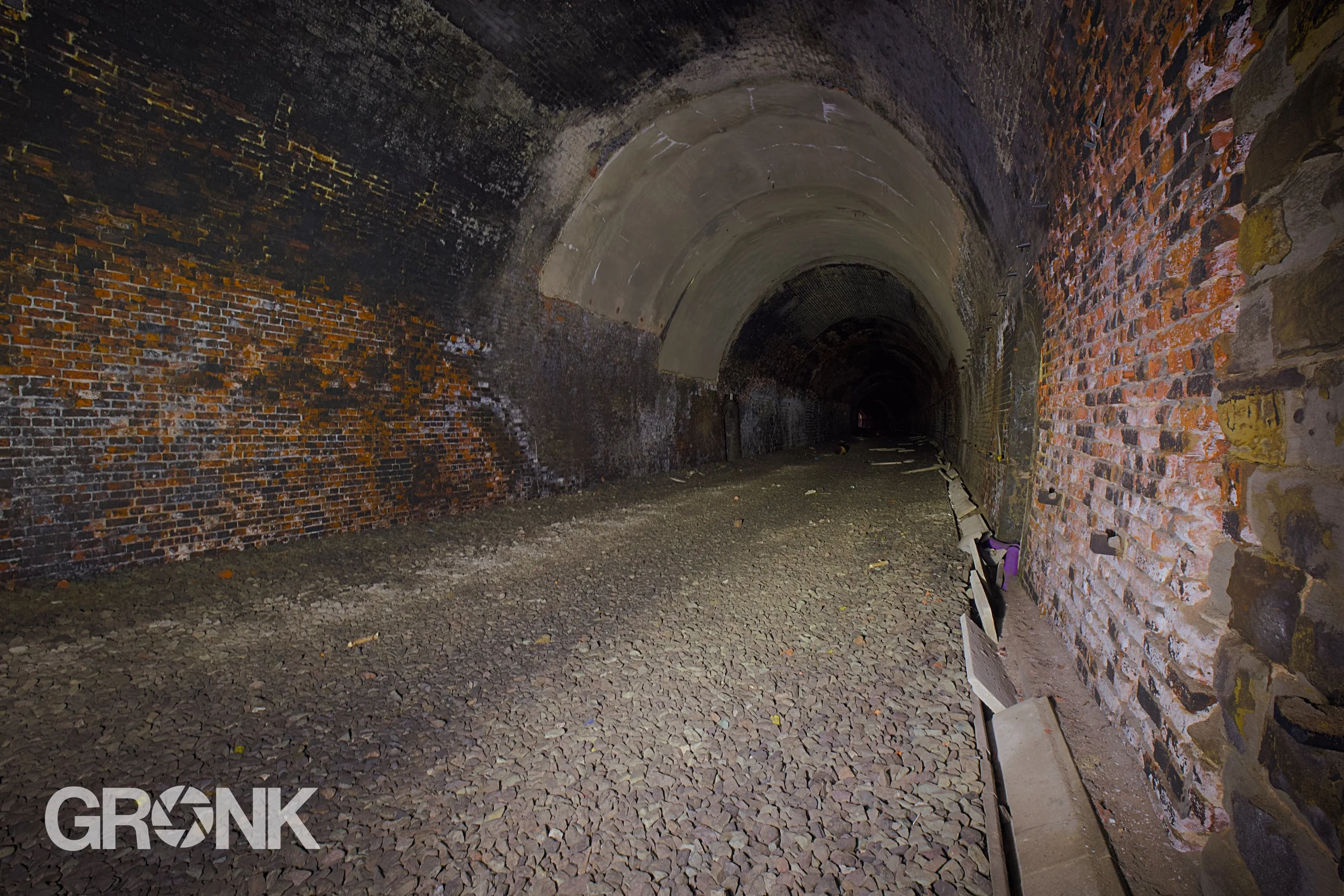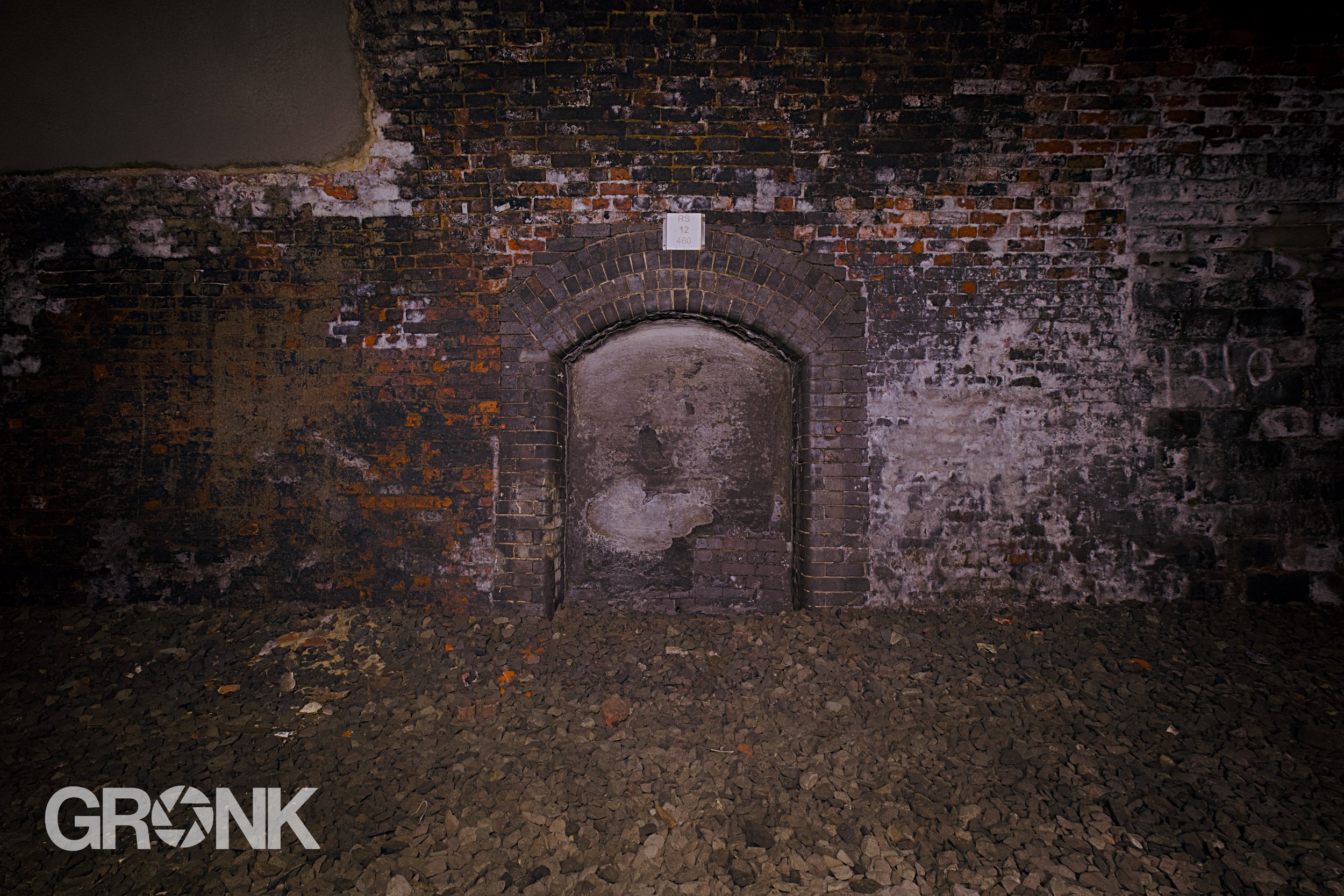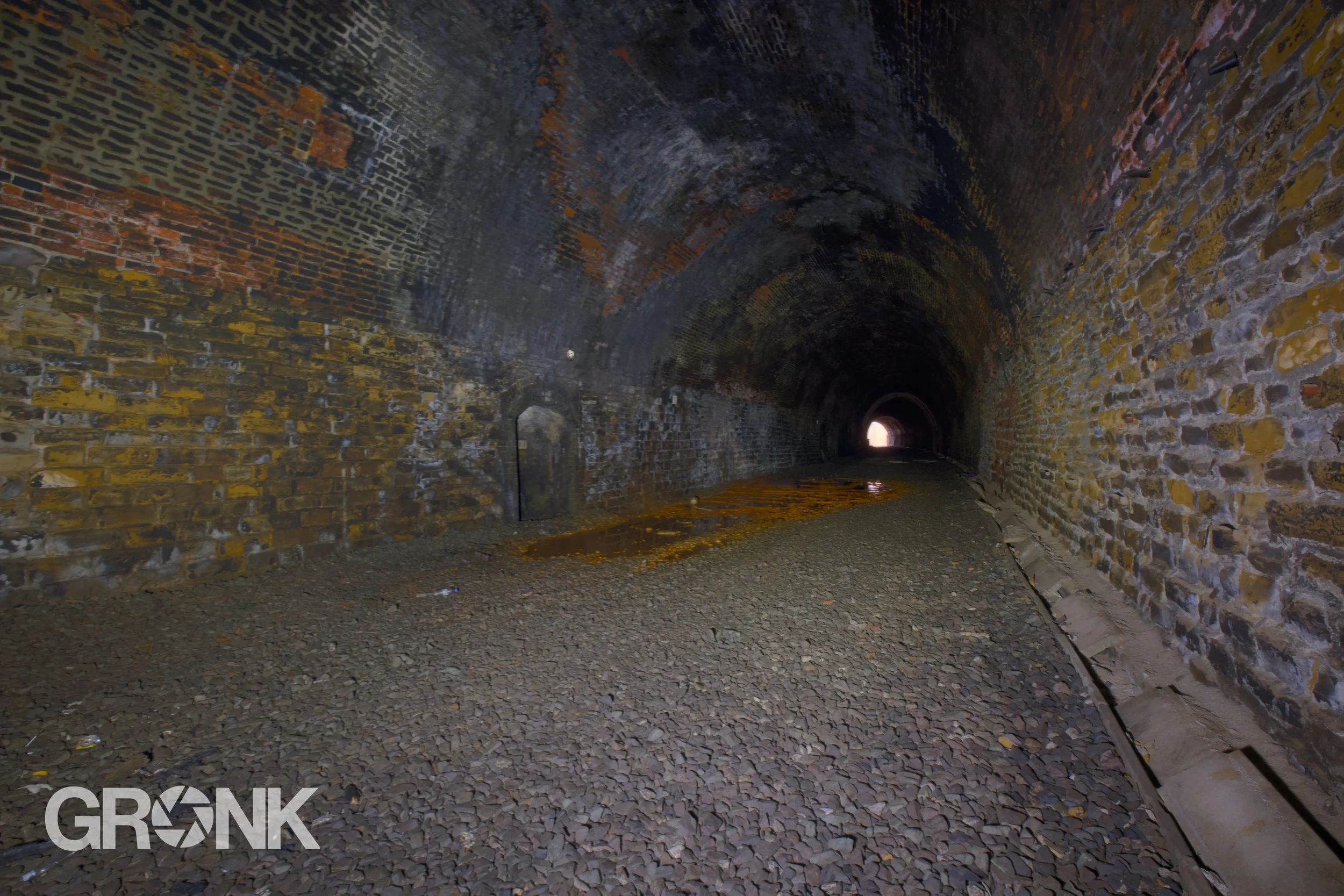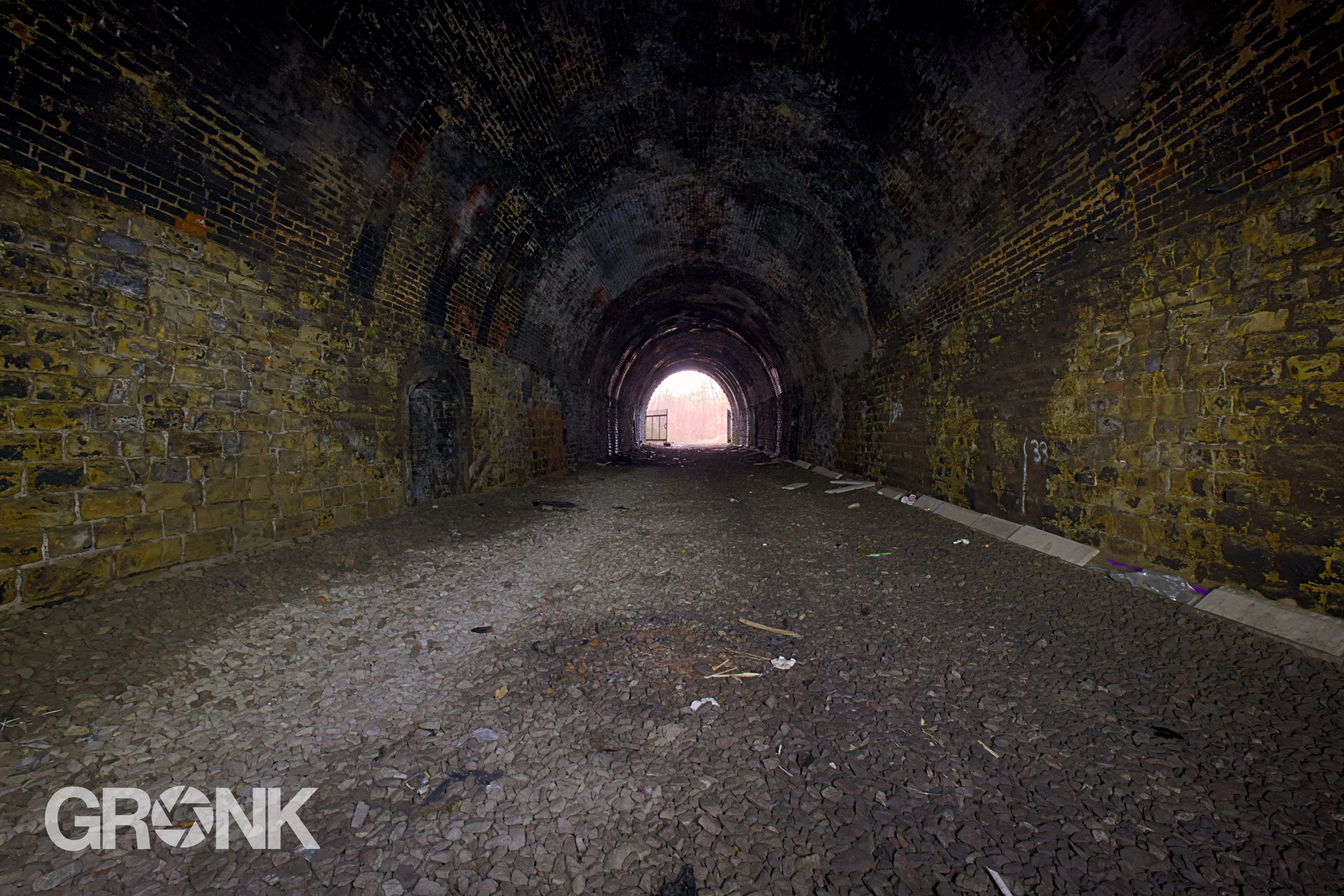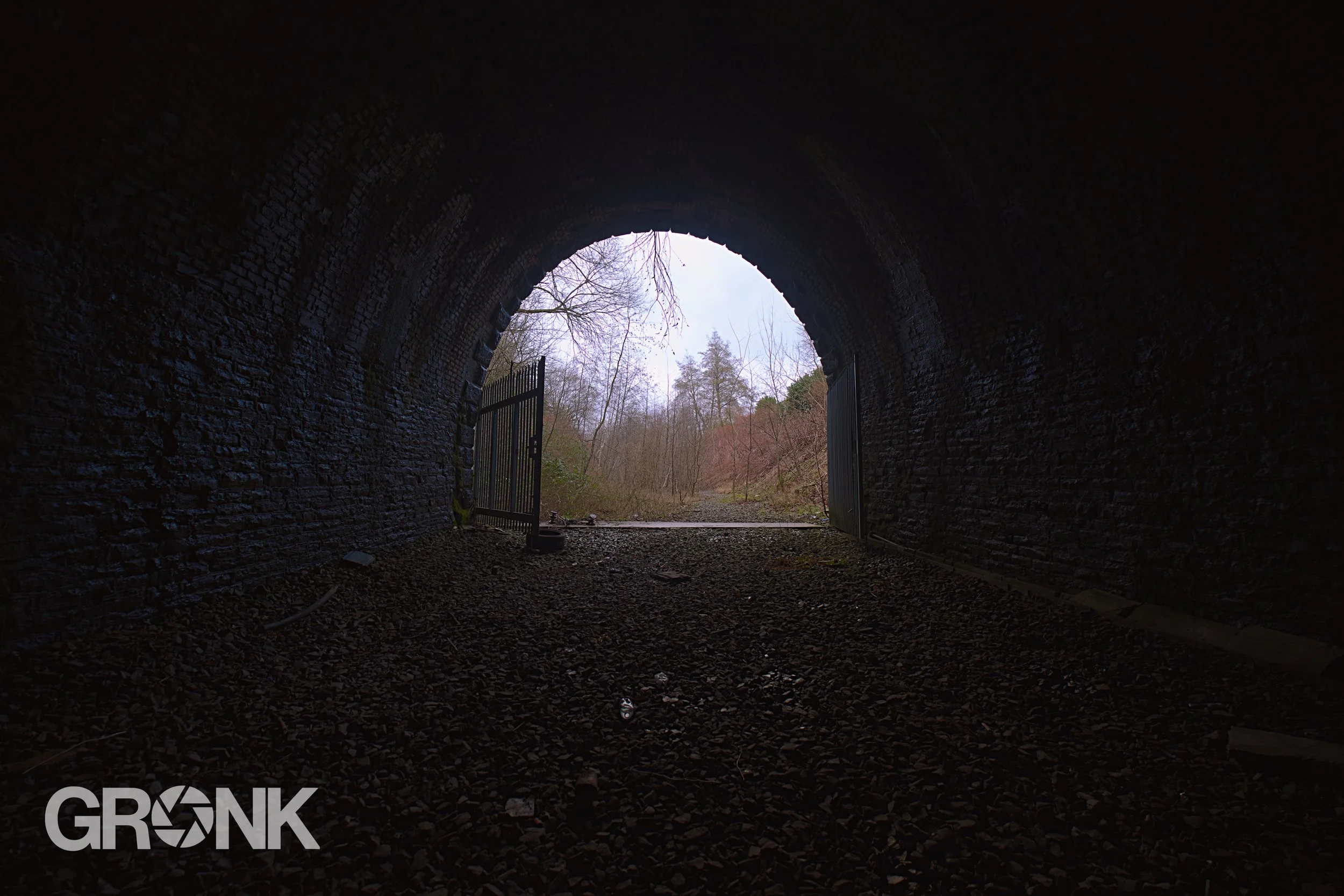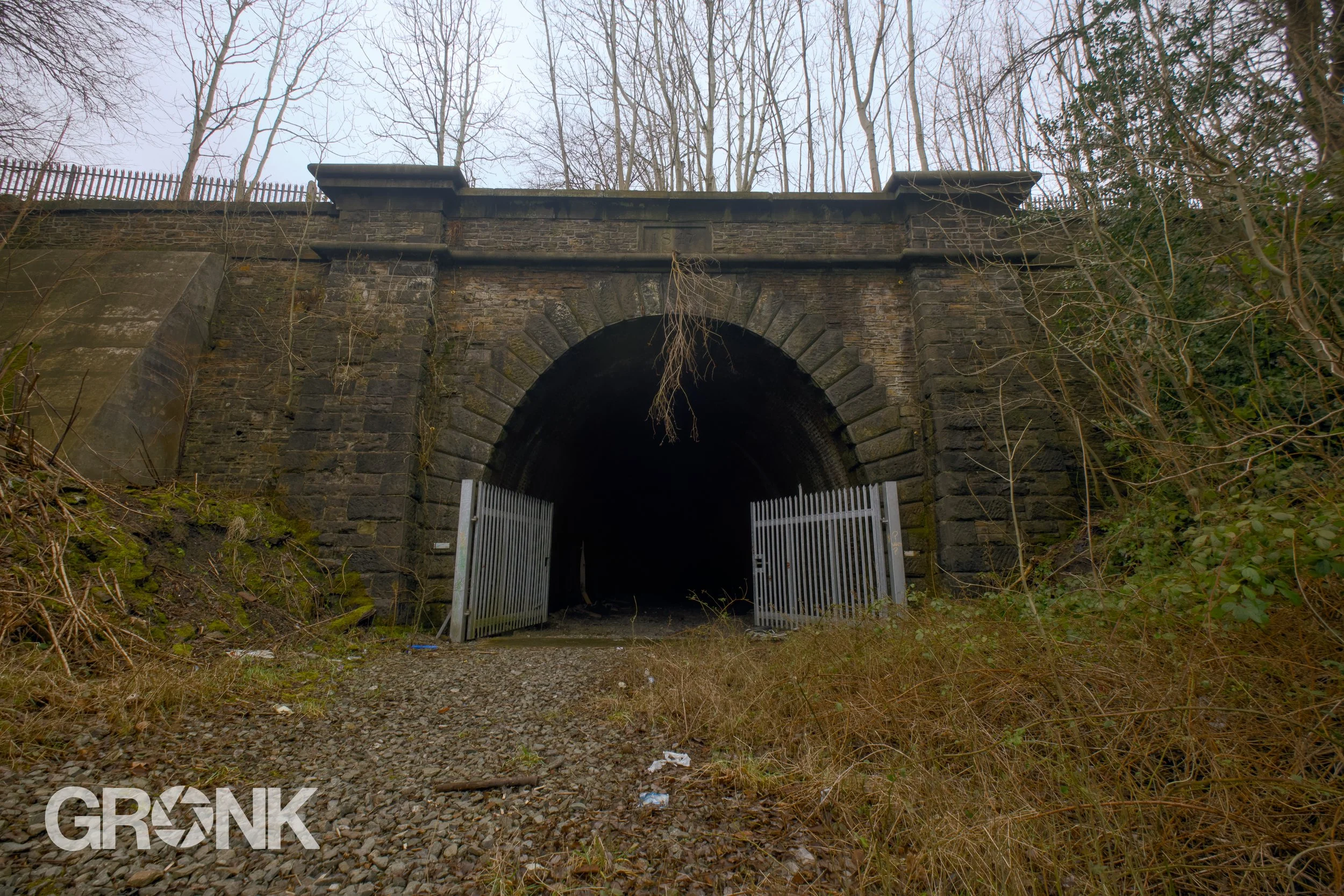
Central Tunnel, Oldham
The Central Railway Tunnel in Oldham, Greater Manchester, is a surviving remnant of the town’s Victorian railway past. It was constructed in 1847 as part of the Oldham Loop Line, built by the Lancashire & Yorkshire Railway to connect Manchester with Rochdale via Oldham. The line was vital to Oldham’s booming textile industry and growing population, providing both passenger and freight services.
Oldham’s steep, hilly terrain posed significant engineering challenges, and tunnelling was chosen to avoid extreme gradients. The Central Tunnel was driven beneath land to the west of the town centre, linking Oldham Central station with Oldham Werneth. Measuring around 411 metres in length and built on a gentle curve, it was constructed using traditional brick lining typical of mid-19th-century railway tunnels. A second nearby tunnel, the Werneth Tunnel, formed part of the same scheme.
For more than 150 years, the Central Tunnel carried steam, and later diesel, trains as part of local and regional services. It played a quiet but essential role in everyday commuting and industrial transport throughout the 19th and 20th centuries.
The tunnel’s railway use ended in October 2009, when the Oldham Loop Line closed to allow conversion to Manchester’s Metrolink tram system. During the early stages of this conversion, the tunnel was briefly reused by Metrolink trams around 2012. However, transport planners ultimately chose to reroute trams onto street-level tracks through Oldham town centre to improve accessibility and regeneration.
As a result, the Central Tunnel was taken out of use once again, with tracks removed and entrances sealed. Today, it remains hidden beneath Oldham — structurally intact but disused — a largely forgotten piece of Victorian infrastructure that reflects the ambition and engineering skill of Britain’s railway age.